
Families planning care at home often ask: “Do I need a doctor’s prescription before I can hire a nurse or a caregiver?” The answer depends on what kind of help you are looking for. Here is a simple way to think about it.
Daily care and companionship
If you need someone to help with daily living, such as meals, bathing, moving safely and company, you can usually arrange a caregiver without a formal prescription. This is the kind of care our live-in caregivers provide. Even so, we always recommend talking to the patient’s doctor first, because the doctor can tell you what the patient can and cannot do, what to watch for and what diet and activity are safe.
Medicines and routine health checks
Giving prescribed medicines on time and noting readings such as temperature, pulse, blood pressure or sugar are part of daily care. They should follow the doctor’s prescription and instructions. Keep the latest prescription and discharge summary at home, and share them with the caregiver on the first day.
Clinical procedures
Procedures such as injections, IV fluids, dressing of surgical wounds or catheter care need a doctor’s written instructions and should be done by a qualified clinical professional. Our caregivers do not give injections or IV treatment. If your doctor has advised these, ask the doctor or hospital how they suggest arranging them, and keep the instructions in writing.
Why a doctor’s advice is always worth having
- It tells the family what is safe at home and what needs hospital care.
- It lists the medicines, timings, diet and activity limits the caregiver should follow.
- It names the warning signs that mean you should call the doctor or 112.
- It gives the caregiver and the family one clear plan to follow.
What to keep ready before the caregiver joins
- The latest prescription and a list of medicines with timings
- The hospital discharge summary, if the patient was recently admitted
- Reports of recent tests
- The doctor’s and hospital’s phone numbers
- Diet and fluid advice, and any allergies
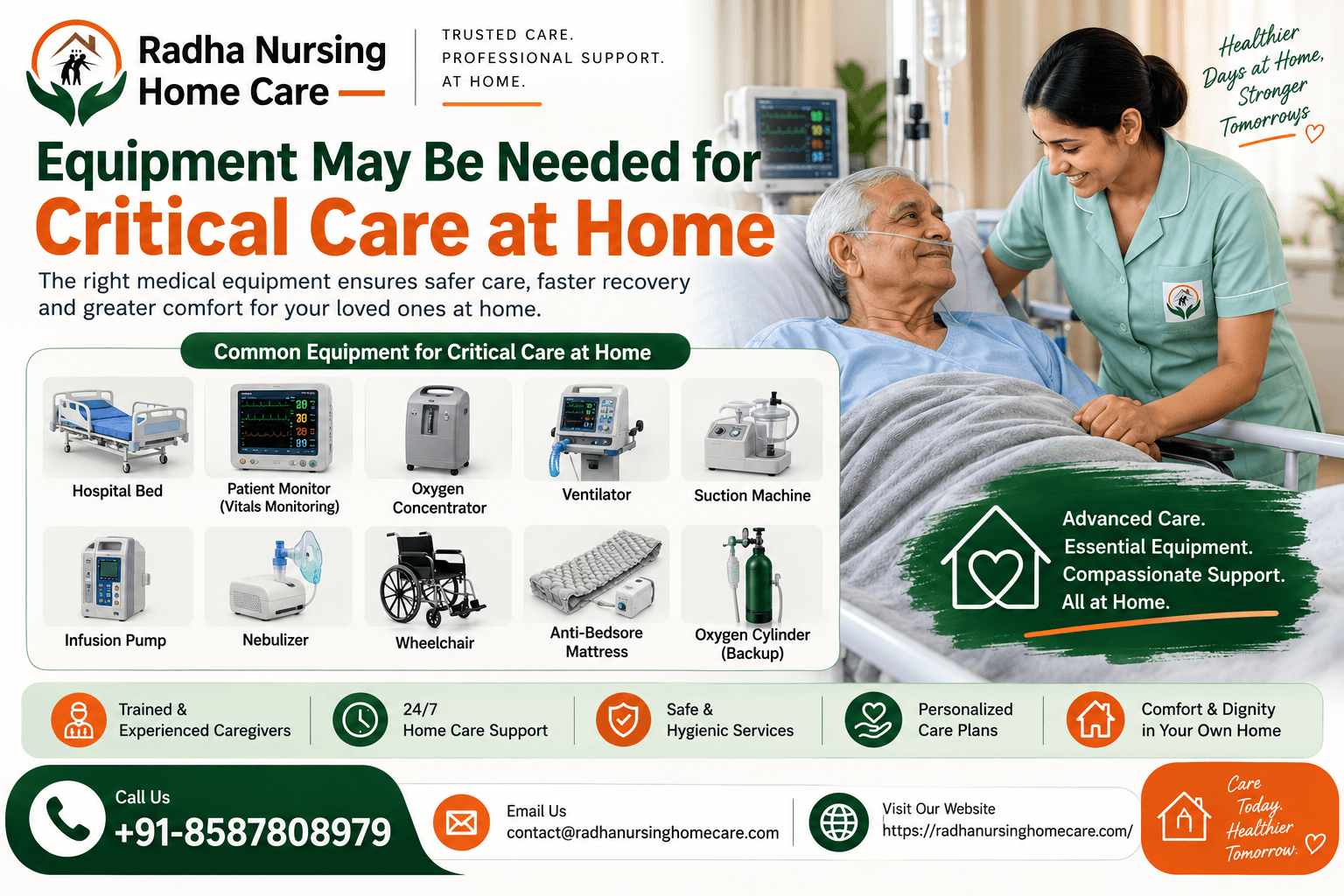
- A note of any equipment at home, such as an oxygen concentrator or a hospital bed
What if there is no prescription yet?
Do not worry. Many families call us before the doctor visit, especially when a parent has been getting weaker for some time. We can talk through what help is needed, and you can take the doctor’s advice at the next visit. We would only ask that you share the doctor’s instructions with the caregiver as soon as you have them.
Our caregivers support daily care and follow your doctor’s advice. They do not replace your doctor or change treatment. We provide 24-hour live-in care only, and we do not provide physiotherapy. For a closer look at what is included, see our Home Nursing Care page and our Patient Care Taker page.
Questions to ask the doctor at the discharge or follow-up visit
A prescription is only as useful as the conversation behind it. Before you leave the clinic or hospital, ask the doctor these questions, and write down the answers or ask for them in writing:
- What is the main problem, and what is the plan for the next few weeks?
- Which medicines must be given, at what times, and what should we do if a dose is missed?
- What diet, fluid and activity limits apply? Can the patient walk, climb stairs or sit up?
- How often should temperature, pulse, blood pressure or sugar be checked, and what readings should worry us?
- Does the patient need any clinical procedure at home, such as a dressing or injection, and who should do it?
- What warning signs mean we should call you, and what signs mean we should go straight to hospital?
- When is the next appointment, and which reports should we bring?
These seven answers form a care plan that any caregiver can follow. The National Institute on Aging’s caregiving guide also has useful advice on preparing questions for doctor visits.
What to say to an agency on the first phone call
You do not need medical vocabulary to start. A clear, simple description is enough:
- Who needs care, their age and the main problem (“my father is 82 and had a hip operation two weeks ago”).
- What the doctor has said about daily care, medicines and any clinical tasks.
- Where the patient is, at home or still in hospital, and when care should begin.
- What the patient can and cannot do for themselves, such as walking, eating and using the bathroom.
- Your address and a contact number for the family member in charge.
A good agency will listen, ask follow-up questions and tell you honestly what it can and cannot provide. If an agency promises to do everything, including injections and procedures, without asking for any medical information, be careful. Our guide on questions to ask a home nursing agency before hiring in Delhi lists what to ask in return.
Common myths about hiring a nurse or caregiver
- “A caregiver can do everything a nurse does.” Not so. A caregiver supports daily care. Clinical tasks need a qualified nurse or doctor.
- “If there is no prescription, there is no need for a doctor.” A doctor’s advice makes care safer, even when no formal prescription is needed.
- “A caregiver can change the medicine if the patient feels worse.” Never. Only the doctor can change a medicine or a dose.
- “Home care means no more hospital visits.” Patients still need follow-up visits and tests, and the caregiver helps the family prepare for them.
- “Any helper will do for night duty.” Nights are when patients are most vulnerable, so ask how the caregiver will rest and still be available.
Keeping records that help everyone
Whether or not a prescription is required for your situation, good records make care safer. Keep one folder, in print or on your phone, with the latest prescription, discharge summary, reports, vaccination or allergy details, and a one-page list of medicines with timings. Take a photo of each new prescription and share it in the family group. For general information on health services and rules in India, the Ministry of Health and Family Welfare is the official source.
Related reading
- Can a caregiver give injections or IV at home? Understanding the limits
- Nursing home vs home nursing care: which is right for your parent?
- Medical vs non-medical patient care in Delhi NCR
- How do I find a patient care taker for my parent in Delhi?
Frequently asked questions
Is a prescription needed for a patient care taker?
Usually not for daily care and companionship, but a doctor’s advice is very helpful, and it is essential for medicines and any clinical task.
Can the caregiver follow instructions from the hospital discharge papers?
Yes, for the daily care parts such as medicines, diet and activity. Share the discharge summary with the caregiver on day one.
Rules differ, so what should I do?
If you are not sure, ask your doctor and the agency. We are happy to explain what our caregivers can and cannot do before you decide.
Have a question?
Call us and tell us what the doctor has advised, and we will explain how we can help. We serve Noida, Gurugram, Faridabad, Ghaziabad and Greater Noida.
Call +91-8587808979 or message us on WhatsApp. You can also reach us from the Contact Us page.