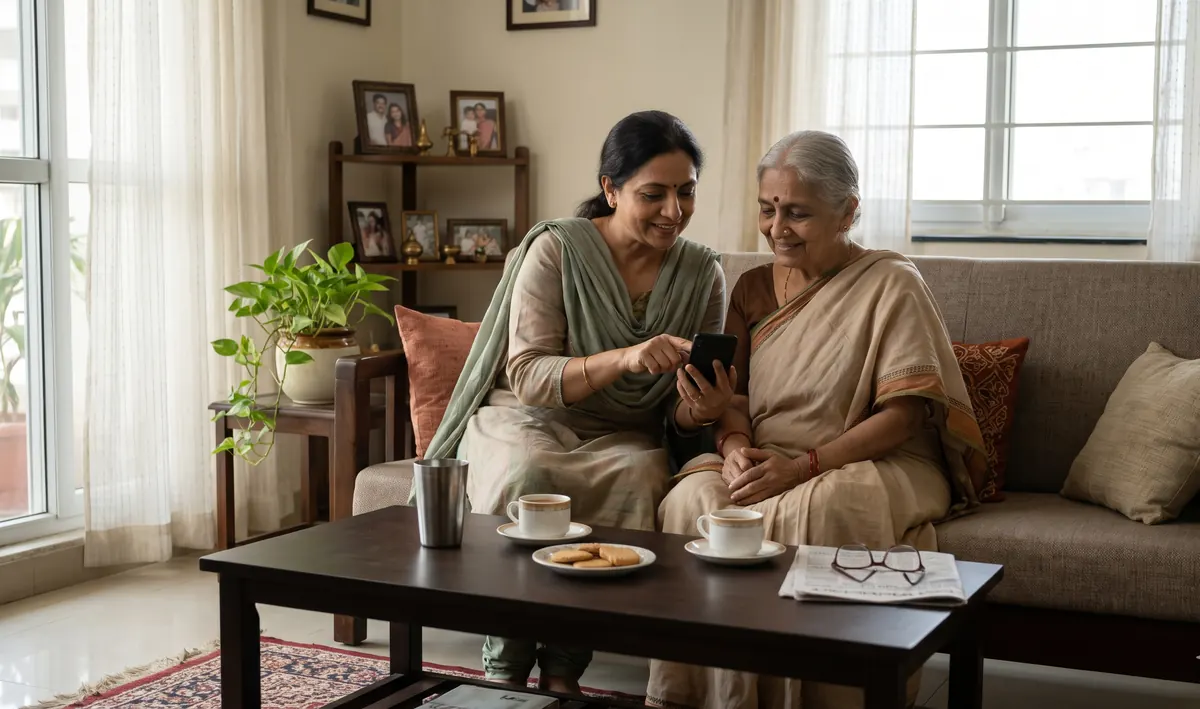
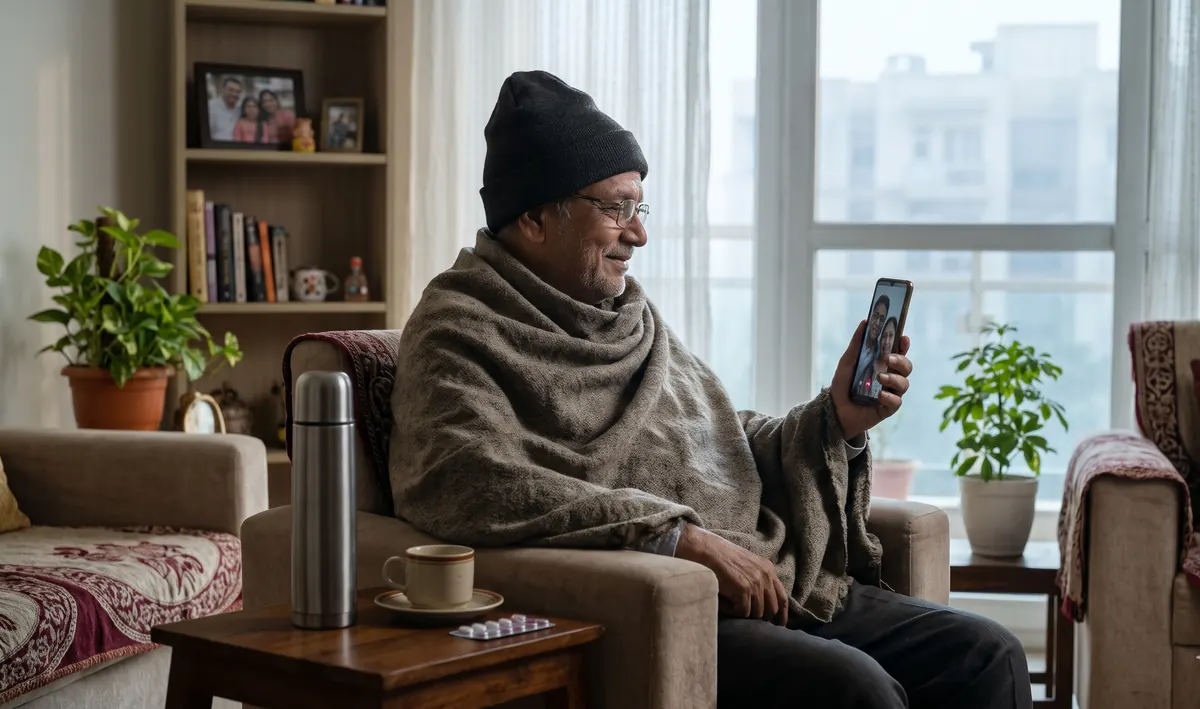
When your parents live alone and the cold wave arrives, you worry from a distance. Did they turn on the heater safely? Did they take their medicines? Did they eat? This checklist is designed for exactly that moment: a simple list you can go through with your parent, by phone or in person, before the cold sets in.
It is general advice and does not replace your doctor’s guidance. The National Institute on Aging’s cold weather guide is also a good, trusted reference for older adults.
1. Warmth and clothing
- Warm layers, socks and a cap are within easy reach, not in a high cupboard.
- The bed has an extra blanket, and the pillow and bedsheet are dry.
- Your parent knows to put on layers before feeling cold, not after.
- If a heater is used, it is placed away from the bed, curtains and clothes, and switched off before sleeping.
- The room has some fresh air, because closed rooms with a burning heater can be unsafe.
2. Medicines
- All medicines are in one labelled organiser with morning, afternoon and night boxes.
- There are at least a few weeks of stock, so your parent does not need to go out in fog to buy them.
- The doctor has been asked whether anything needs to change for winter.
- A printed list of medicines and doses is kept near the phone.
3. Food and water
- Easy, warm meals are stocked: dal, khichdi, soup, porridge, fruit.
- A flask of warm water is kept by the bed or chair.
- Someone can deliver groceries and cooked meals if your parent cannot go out.
4. Phones and daily check-ins
- Emergency numbers are written in big letters near the phone: you, a neighbour, the doctor, the hospital, and 112.
- There is a fixed time for a daily call or video call, and a backup person if your parent does not answer.
- The phone is charged at night and kept within reach of the bed.
5. Safety at home
- Night lights are on between the bed and the bathroom.
- Floors are dry, rugs are secured, and the bathroom has a non-slip mat.
- Cold floors are covered with a mat or slippers with a good grip.
- A neighbour or building guard has your number and a spare key arrangement you trust.
6. Air quality and going out
- Your parent knows to avoid very early mornings and late evenings outdoors in cold and fog.
- On poor-air days, windows are kept closed and outings are kept short.
- Doctor visits are planned for the warmer part of the day when possible.
A 10-minute phone call script for the family member far away
If you cannot visit, a short, regular call can cover most of the checklist. Try asking, in a relaxed way, rather than quizzing your parent:
- “Did you sleep well? Was the room warm enough?”
- “What did you eat today? Did you have something warm to drink?”
- “Did you take your morning medicines? Shall I stay on the line while you check the box?”
- “Did you go out? How was the air and the cold?”
- “Is there anything you need from the market or the chemist? I can arrange it.”
- “Did anyone visit? Did you talk to a neighbour?”
Listen to how your parent sounds, not only to what they say. A slower voice, repeated questions, a cough or a lack of interest in food can be early warnings.
A simple daily log
Keep a shared note, in a notebook near the phone or in a family WhatsApp group, with these columns for each day: time of waking, medicines taken, meals, fluids, outings, mood, any symptoms, and who called. Over a week, patterns become obvious: a missed evening tablet, poor sleep after a cold night, a cough that is slowly worsening. The log also helps the doctor, who will want to know what has changed and when. The National Institute on Aging’s guide to preventing falls is a useful companion, because winter dizziness, stiff joints and slippery floors raise the risk of a fall.
Neighbours and building staff as a safety net
If you live far away, the people nearest to your parent are your best early-warning system. Introduce yourself to a trusted neighbour and to the society office or the building guard. Share your number and ask them to call if the door has not opened by a certain hour, the newspaper is untouched or your parent seems unwell. Make this a two-way arrangement: offer to help them in return, and thank them. If your parent lives in a gated society, ask the management how they handle medical emergencies and ambulance access.
Looking after mood and loneliness in the cold months
Short winter days and foggy mornings can leave older people feeling low and isolated, particularly if they have lost a spouse or friends. Encourage small pleasures: a warm cup of tea at a fixed hour, a favourite radio programme, bhajans, photographs, phone calls with grandchildren, and short sit-outs in the sun on clear afternoons. If you notice persistent sadness, loss of interest or changes in appetite and sleep, mention it to the doctor, because low mood is a health matter and not a weakness.
Preparing for a power cut or a hospital visit
- Keep a charged power bank, a torch and spare batteries where your parent can reach them.
- Keep a small “go bag” ready with ID, a medicine list, recent reports, a phone charger and a warm shawl.
- Know the nearest hospital and the fastest route, and keep a neighbour’s number for help getting down the stairs.
- If your parent uses oxygen or a nebulizer, ask the supplier what to do during a power cut.
Related reading
- Senior care at home in Delhi in winter and smog
- Delhi AQI and older adults: protecting a parent with asthma or COPD
- 24×7 elder care in Delhi: when is it time to hire one?
- What to look for in an elderly care service in Delhi
Know the warning signs
Please call the doctor, or 112 in an emergency, if your parent has:
- Shivering that does not stop, cold or pale skin, slow or slurred speech, or unusual sleepiness
- Fast or difficult breathing, chest pain, or a cough that is getting worse
- Sudden confusion, dizziness or a fall
- A fever that does not come down
When a daily phone call is no longer enough
Many families start this checklist as a phone routine and then realise it is not enough. Warning signs include missed medicines, weight loss, repeated small falls, a messy kitchen, or your parent sounding more tired or confused on the phone. At that point, a caregiver who lives in the house can notice what a phone call cannot.
At Radha Nursing Home Care we provide 24-hour live-in care only. The caregiver stays day and night, helps with medicines as prescribed, meals, safe movement and company, and tells the family quickly if anything changes. Our caregivers follow your doctor’s advice and do not replace the doctor. We also do not provide physiotherapy. Read about our Old Age Care service to see how it works.
Frequently asked questions
How warm should an elderly person’s room be?
It should feel comfortably warm, without being stuffy. Layers and blankets usually work better and are safer than overheating the room with a heater.
Is it safe to leave an elderly parent alone during a cold wave?
It depends on their health and mobility. If your parent is frail, forgetful or has a chronic illness, it is safer to have someone with them, especially at night.
What if my parent refuses help?
Start with small steps and involve them in the decision. Our guide on talking to a parent about a caregiver may help.
We are here if you need us
If you live far away or work long hours and feel uneasy about your parent’s winter, call us. We serve Delhi NCR, including Noida, Gurugram, Faridabad and Ghaziabad.
Call +91-8587808979 or message us on WhatsApp. You can also visit our Contact Us page.