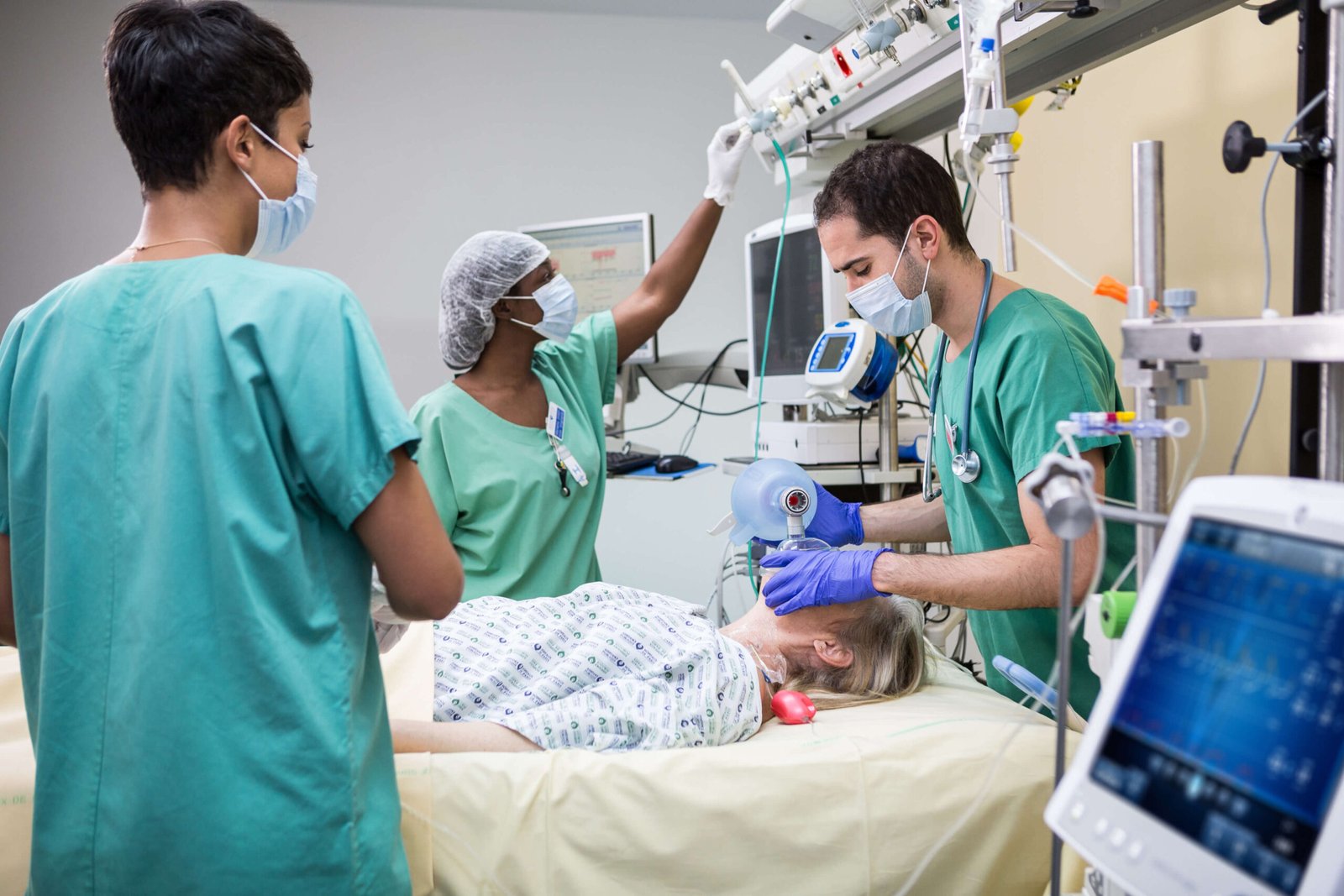
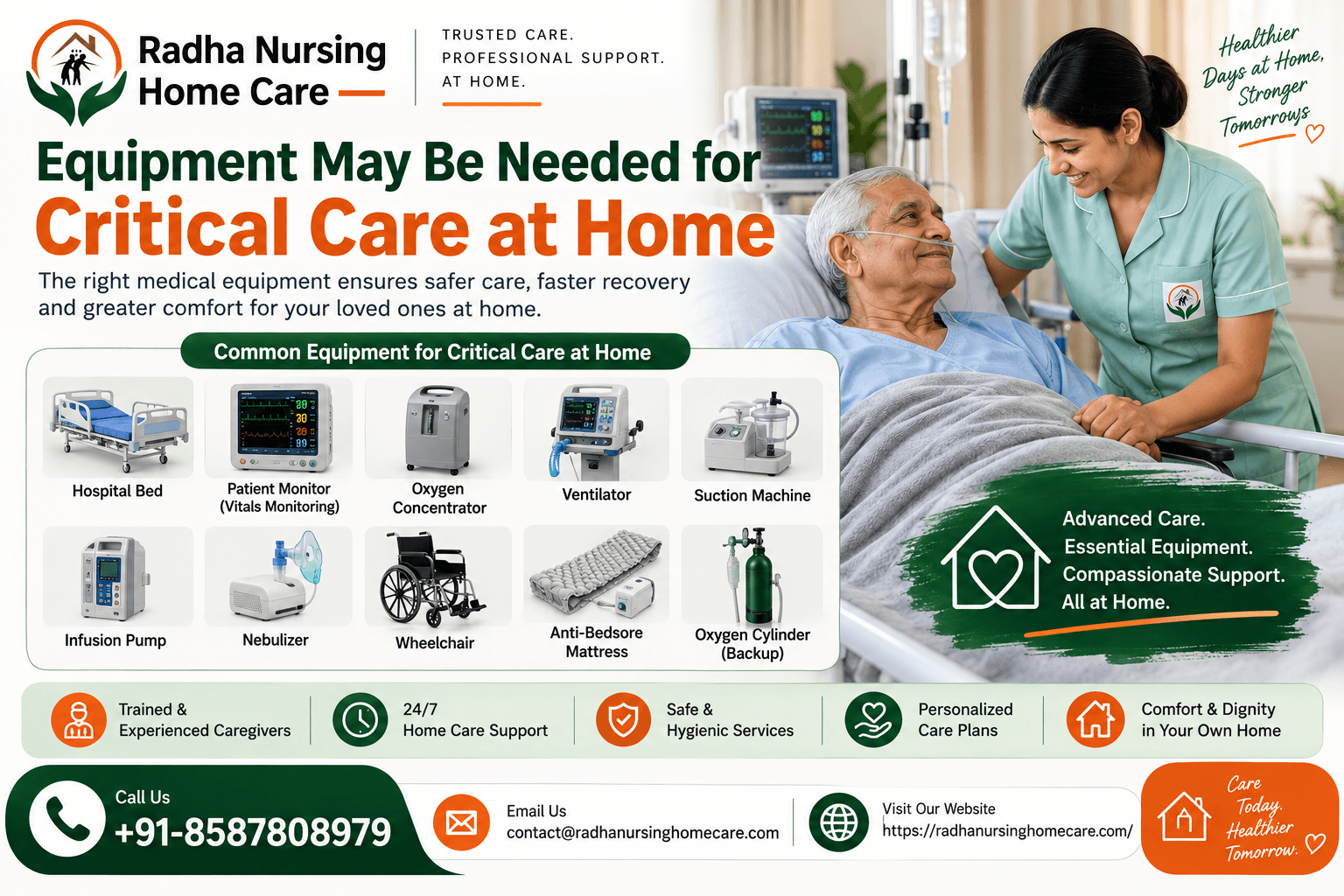
When a patient returns home after a serious illness, surgery, intensive care treatment, or a prolonged hospital stay, families may need to create a safe and supportive care environment. In some cases, this can involve specialized equipment, professional nursing support, and careful coordination with the treating medical team.
Critical care at home is not simply about having medical equipment in the house. It requires an appropriate care plan, trained professionals, infection-control practices, emergency planning, and regular communication with healthcare providers.
The equipment needed depends entirely on the patient’s medical condition. Some patients may only require monitoring and mobility support, while others may need oxygen therapy, suction equipment, feeding support, or advanced respiratory assistance.
What Is Critical Care at Home?
Critical care at home refers to providing ongoing medical and supportive care to patients with complex or serious health needs outside a hospital environment.
It may be considered for certain patients who are medically stable enough to remain at home but still require regular professional supervision and specialized equipment.
Patients who may require this type of care can include those recovering from:
- Serious infections or prolonged illness
- Major surgery
- Neurological conditions
- Respiratory problems
- Long-term medical conditions
- Prolonged hospitalization
- Certain complications requiring continued monitoring
The decision to provide critical care at home should always be made with the patient’s healthcare team. Not every patient who has been in intensive care is suitable for home-based critical care.
What Equipment May Be Needed?
There is no universal equipment list for every patient. The treating doctor or qualified healthcare professional should determine what is actually required.
Some commonly used categories include the following.
1. Hospital-Style Adjustable Bed
An adjustable medical bed can make patient care safer and more convenient, particularly for people who spend most of their time in bed.
Features may include adjustable back and leg positions and height adjustment. Depending on the patient’s condition, specialized mattresses may also be recommended to help reduce pressure-related complications.
A suitable bed can make it easier for caregivers and nurses to provide personal care, repositioning, feeding, and transfers.
2. Patient Monitoring Equipment
Some patients require regular monitoring of vital signs.
Depending on the care plan, equipment may include:
- Blood pressure monitor
- Pulse oximeter
- Thermometer
- Blood glucose monitoring equipment
- Other clinically prescribed monitoring devices
These devices can help trained caregivers or healthcare professionals observe changes in the patient’s condition.
However, families should not attempt to interpret abnormal readings independently when the patient has complex medical needs. The healthcare team should provide clear instructions about what to monitor and when to seek medical attention.
3. Oxygen Equipment
Some patients may require supplemental oxygen at home because of respiratory or other medical conditions.
Depending on the prescription and patient’s requirements, oxygen may be delivered through equipment such as an oxygen concentrator or oxygen cylinder.
Oxygen therapy should only be used according to medical advice. Families should also understand equipment operation, prescribed flow settings, storage requirements, and safety precautions.
A provider offering home healthcare services in Delhi may be able to coordinate appropriate professional support when oxygen-dependent patients require home care.
4. Suction Equipment
Some critically ill or neurologically impaired patients may have difficulty clearing secretions from their airway.
A suction machine may be prescribed in specific circumstances to assist with secretion management.
Because improper suctioning can cause complications, this equipment should be used only by appropriately trained individuals following the patient’s clinical instructions.
5. Feeding Equipment
Patients who cannot safely eat or drink normally may sometimes require enteral feeding through a feeding tube.
Depending on the patient’s medical plan, equipment may include:
- Feeding pumps
- Feeding sets
- Syringes
- Feeding bags
- Appropriate tube-care supplies
Feeding through a tube requires proper training and hygiene. Family members should follow the instructions provided by the healthcare team rather than making changes to the feeding schedule or method independently.
6. Wheelchair and Mobility Equipment
Patients recovering from serious illness may have limited mobility.
Depending on their condition, mobility equipment can include:
- Wheelchairs
- Walkers
- Transfer aids
- Bedside commodes
- Support rails
The correct equipment should be selected according to the patient’s strength, mobility, balance, and home environment.
For patients recovering from neurological conditions, neuro patient care at home in Delhi may involve additional mobility and rehabilitation requirements determined by healthcare professionals.
7. Pressure-Relieving Mattress
Patients who remain in bed for prolonged periods may be at increased risk of pressure injuries.
A pressure-relieving mattress can be part of a broader prevention strategy. However, equipment alone does not eliminate the risk.
Regular repositioning, skin inspection, appropriate nutrition, hygiene, and professional assessment may also be necessary.
Families should follow the patient’s individualized care plan.
8. Nebulizer
A nebulizer may be prescribed for certain respiratory conditions to deliver medication in an inhaled form.
It should be used only when recommended by a healthcare professional. The prescribed medication, dosage, frequency, and cleaning procedure should be followed carefully.
A nebulizer is not automatically necessary for every patient receiving home care.
9. Infusion and Medication-Related Equipment
Some patients may require intravenous medications or fluids at home. In such cases, specialized equipment may be necessary.
These services should be handled by appropriately qualified healthcare professionals. Families should not attempt intravenous procedures themselves unless specifically trained and authorized to do so.
This is one reason why Professional Nurse services At Home can be important for patients whose care involves clinical procedures.
10. Emergency and Safety Supplies
A home caring for a medically complex patient should have a clear emergency plan.
Depending on the patient’s condition, families may need:
- Emergency contact information
- A list of current medications
- Important medical records
- Doctor and hospital contact details
- Backup power arrangements for essential equipment
- Basic first-aid supplies
- Clearly accessible pathways for emergency transport
The exact requirements should be discussed with the healthcare team.
Why Professional Nursing Support Matters
Having medical equipment at home does not replace professional care.
A monitor can display a reading, but trained healthcare professionals are needed to understand the patient’s overall clinical situation and respond appropriately within their scope of practice.
Similarly, equipment such as oxygen systems, suction machines, feeding pumps, and other medical devices requires proper training.
Nursing care services at home in Delhi may help families manage complex care routines under an appropriate medical plan.
Depending on the patient’s condition, nurses may assist with:
- Monitoring according to the care plan
- Medication administration within their professional scope
- Wound and dressing care
- Catheter-related care
- Feeding support
- Personal care
- Observation for changes in condition
- Communication with family members and healthcare providers
The exact duties depend on the nurse’s qualifications and the patient’s prescribed care plan.
Can a Patient Caretaker Manage Critical Care?
A general patient caretaker and a professional nurse have different responsibilities.
A caretaker may help with bathing, feeding, mobility, hygiene, positioning, companionship, and other daily activities. However, complex clinical procedures should be performed by appropriately qualified professionals.
Families looking for Home Patient Care Taker Services should explain the patient’s condition before selecting a caregiver. If the patient requires clinical nursing support, the provider should arrange appropriately qualified nursing personnel.
This distinction is particularly important for patients recently discharged from intensive care.
Preparing the Home for Critical Care
Before bringing a medically complex patient home, families should prepare the care environment.
Create Adequate Space
The patient should have enough room around the bed for caregivers and nurses to work safely.
Arrange Electrical Backup
If essential medical equipment requires electricity, families should discuss backup power requirements with the equipment provider and healthcare team.
Maintain Cleanliness
Medical equipment and the patient’s surroundings should be kept clean according to the relevant instructions.
Keep Supplies Organized
Frequently used supplies should be stored in an accessible but safe location. Medicines and medical supplies should be clearly labeled.
Prepare an Emergency Plan
Everyone involved in the patient’s care should know what to do if the patient’s condition suddenly changes.
How to Decide What Equipment Is Required
Families should not purchase every medical device they see online or receive recommendations for from non-medical sources.
Instead, ask the treating healthcare team:
- What equipment does the patient actually need?
- Which devices are essential?
- Who will operate each device?
- Does the caregiver require professional training?
- What should be done if the equipment stops working?
- Is backup equipment or power required?
- Which symptoms require immediate medical attention?
This approach helps avoid unnecessary expenses and reduces the risk of incorrect equipment use.
Critical Care at Home Requires More Than Equipment
Successful home-based care involves several components working together: appropriate equipment, qualified professionals, family participation, hygiene, medication management, emergency planning, and regular medical follow-up.
For families exploring Nursing Care in Delhi NCR, it is important to choose services based on the patient’s actual clinical and personal-care needs.
Radha Nursing Home Care can be considered when families are exploring home-based nursing and patient-care support and need to discuss the type of assistance required.
Final Thoughts
The equipment needed for critical care at home depends on the patient’s diagnosis, mobility, respiratory status, nutritional needs, and overall care plan.
Common equipment may include an adjustable hospital bed, monitoring devices, oxygen equipment, suction machines, feeding equipment, mobility aids, pressure-relieving mattresses, and other prescribed medical devices. However, not every patient needs all of these items.
The safest approach is to follow the treating healthcare professional’s recommendations and ensure that anyone operating specialized equipment has appropriate training.
With proper planning, qualified home nursing care services at home in Delhi, suitable equipment, and a clearly defined care plan, some medically stable patients can receive a structured level of support in their own homes.
Frequently Asked Questions
Depending on the patient’s condition, equipment may include a hospital bed, vital-sign monitors, oxygen equipment, suction machines, feeding equipment, mobility aids, pressure-relieving mattresses, and other medically prescribed devices.
No. Equipment requirements vary significantly between patients. The treating healthcare team should determine which devices are medically necessary.
Some basic devices may be used by family members after appropriate instruction. Complex medical equipment should be operated by trained professionals according to the patient’s care plan.
Oxygen therapy can be provided at home when prescribed by a healthcare professional. Families must follow the prescribed instructions and appropriate oxygen-safety precautions.
Some patients require professional nursing care because of their medical needs. A general caretaker may assist with daily activities but should not be expected to perform clinical procedures outside their qualifications.
In some cases, yes. However, the patient must be assessed as suitable for home-based care by the treating medical team, and appropriate equipment, professional support, and emergency arrangements should be in place.
An adjustable hospital bed can make positioning, feeding, personal care, transfers, and nursing procedures easier and safer for patients with limited mobility.
Start by discussing the patient’s requirements with the treating doctor or healthcare team. Then approach a suitable home care provider and clearly communicate the patient’s diagnosis, equipment needs, nursing requirements, working hours, and emergency considerations.