When a person is living with a neurological condition, everyday care can become more complicated. Conditions such as stroke, paralysis, Parkinson’s disease, traumatic brain injury, multiple sclerosis, and other neurological disorders may affect mobility, communication, swallowing, cognition, bladder or bowel function, and independence.
For families in New Delhi, 24-hour neuro patient care at home can provide continuous assistance while allowing the patient to remain in a familiar environment. Depending on the patient’s condition, this may involve a patient caretaker, professional nurse, physiotherapist, or a combination of home healthcare professionals.
However, 24-hour neuro care is not the same for every patient. The services required should be based on the patient’s diagnosis, functional abilities, medical needs, and treatment plan.
What Is 24-Hour Neuro Patient Care?
24-hour neuro patient care means arranging continuous home-based support for a patient with a neurological condition.
The support may be provided through one live-in caregiver or multiple caregivers working in shifts. Some patients require primarily personal and daily-living assistance, while others need professional nursing care.
Current home-care providers in Delhi NCR advertise services for stroke recovery, paralysis, Parkinson’s disease, and other neurological conditions, with offerings ranging from nursing and patient care to physiotherapy and rehabilitation.
The purpose of continuous care is generally to help with safety, daily activities, monitoring, mobility, nutrition, hygiene, and following the patient’s established care plan.
Who May Need 24-Hour Neuro Care?
Round-the-clock support may be considered for patients who require frequent assistance or should not be left alone.
This may include people recovering from:
- Stroke
- Paralysis
- Traumatic brain injury
- Parkinson’s disease
- Multiple sclerosis
- Certain spinal cord injuries
- Neurological surgery
- Severe mobility impairment
- Other neurological conditions requiring substantial assistance
Not every neurological patient needs 24-hour care. A patient who is independent during the day may only need scheduled nursing, physiotherapy, or caregiver visits.
The appropriate level of care should be discussed with the treating neurologist or healthcare team.
1. Continuous Personal Care and Daily Assistance
One of the most important parts of neuro patient care is assistance with activities of daily living.
Depending on the patient’s abilities, a caregiver may help with:
- Bathing
- Dressing
- Grooming
- Oral hygiene
- Toileting
- Changing clothes
- Adult diaper care
- Bedside hygiene
- Meal assistance
- Moving safely around the home
Neurological conditions can affect balance, strength, coordination, or cognition. A caregiver can provide practical support while encouraging the patient to do whatever activities they can safely manage independently.
2. Mobility and Transfer Assistance
Many neuro patients experience weakness, paralysis, balance problems, or coordination difficulties.
A caregiver may assist with:
- Moving from bed to chair
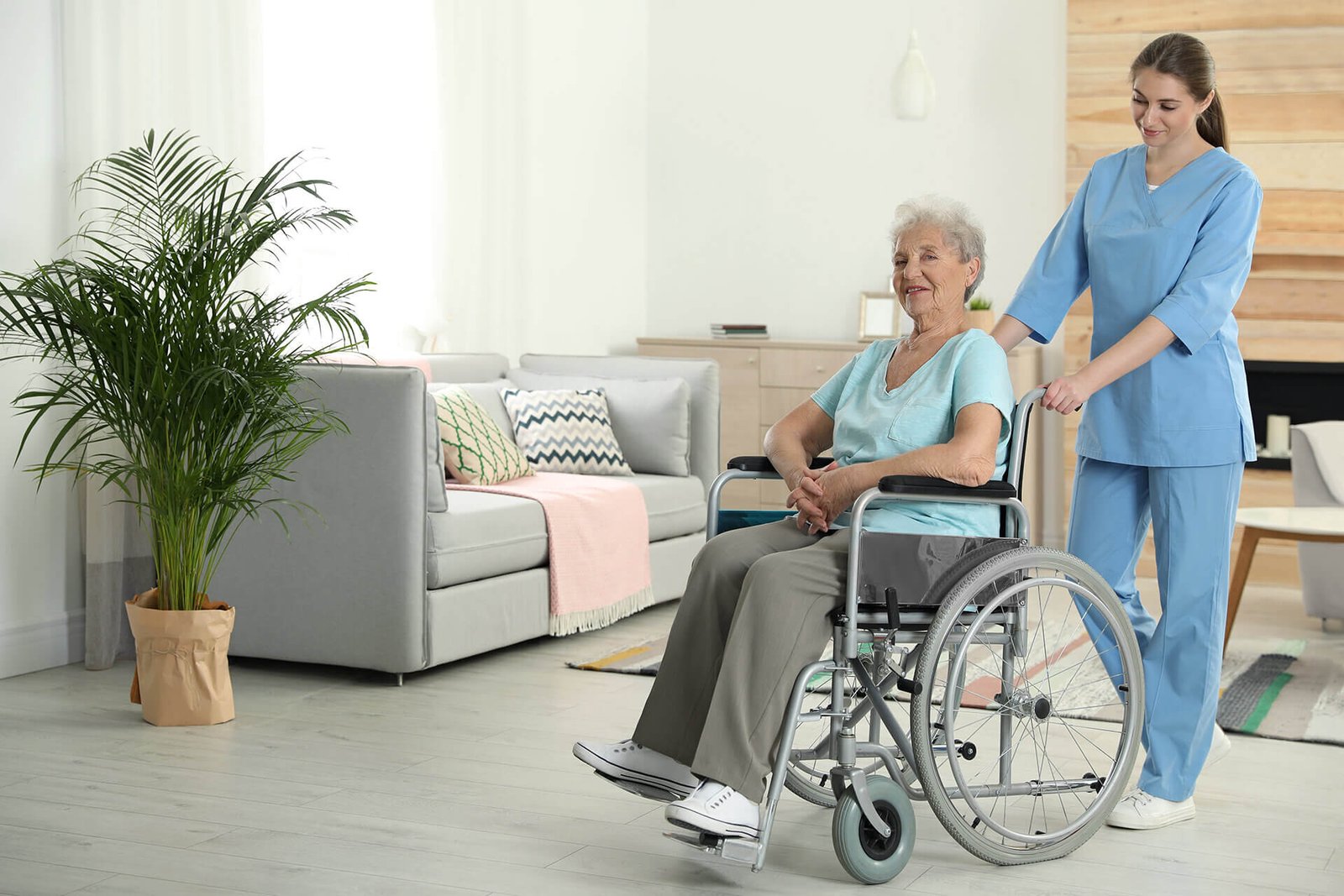
- Wheelchair transfers
- Walking support
- Position changes
- Basic mobility routines
- Fall-prevention measures
For patients with significant mobility limitations, the home environment may also need suitable equipment such as a hospital bed, wheelchair, walker, or other prescribed mobility aids.
Professional assessment is important before starting new mobility exercises.
3. Positioning and Pressure-Sore Prevention
Patients who spend extended periods in bed may be vulnerable to pressure injuries.
Regular repositioning, appropriate skin care, nutrition, hydration, and suitable mattresses can form part of a prevention plan. Some home nursing services specifically include repositioning and pressure-sore prevention for bedridden patients.
The frequency and method of repositioning should follow the patient’s individualized care plan.
Family members should also be taught which skin changes require prompt medical attention.
4. Feeding and Swallowing Support
Some neurological patients have difficulty chewing or swallowing. This is particularly relevant after a stroke or certain neurological injuries.
Depending on the medical plan, support may include:
- Assistance during meals
- Safe positioning during feeding
- Following prescribed dietary instructions
- Monitoring for feeding difficulties
- Assistance with prescribed tube feeding when appropriately trained
Swallowing problems can carry serious risks, including aspiration. A caregiver should not independently change the patient’s diet or feeding method.
If swallowing difficulty is present, the family should follow the recommendations of the treating doctor and, where appropriate, a speech and swallowing professional.
5. Medication Support
Neurological patients may take several medications for their condition or related health problems.
Depending on the caregiver’s qualifications and the service arrangement, support may include medication reminders or medication administration by a qualified nurse.
Medication schedules should always follow the treating doctor’s instructions.
Caregivers should not independently change doses, stop medication, or introduce new medicines without appropriate medical guidance.
6. Vital-Sign and Health Monitoring
Some neuro patients require regular monitoring of their general health.
Depending on the care plan, professional nursing support may include monitoring:
- Blood pressure
- Pulse
- Oxygen saturation
- Temperature
- Blood glucose when relevant
- Other prescribed observations
Home nursing providers in Delhi advertise vital-sign monitoring and clinical supervision as part of professional nursing services.
The purpose of monitoring is not simply to collect numbers. Trained healthcare professionals need to understand when a change may require medical attention.
7. Catheter and Bladder/Bowel Care
Some neurological conditions can affect bladder or bowel function.
Depending on the patient’s needs, home care may involve assistance with:
- Toileting
- Incontinence management
- Catheter-related care
- Bowel routines
- Hygiene
Catheterization and other clinical procedures should only be performed by appropriately trained and qualified professionals.
Families should ask the home-care provider exactly which services are included before starting care.
8. Physiotherapy and Neuro-Rehabilitation Support
Nursing and caregiving are only part of neurological recovery.
Many patients may also benefit from a rehabilitation plan involving physiotherapy, occupational therapy, speech therapy, or other specialist services.
For example, home-based stroke rehabilitation programs in Delhi NCR may combine physiotherapy with speech or occupational therapy depending on the patient’s needs.
A caregiver may assist the patient with prescribed exercises, positioning, transfers, or therapy appointments, but this does not make the caregiver a physiotherapist.
Therapeutic exercises should be prescribed and supervised by an appropriately qualified professional.
9. Communication and Cognitive Support
Neurological conditions can sometimes affect speech, memory, attention, or understanding.
A caregiver may provide companionship and help maintain a structured daily routine.
Depending on the patient’s rehabilitation plan, support can include:
- Encouraging communication
- Following prescribed cognitive activities
- Maintaining familiar routines
- Providing companionship
- Communicating observations to family members
Patients should be treated with patience and dignity, particularly when communication has become difficult.
10. Night-Time Supervision
One major advantage of 24-hour care is that support is available during the night.
A neuro patient may require help with:
- Getting out of bed
- Repositioning
- Toileting
- Feeding according to the care plan
- Managing mobility safely
- Responding to changes that require family or professional attention
Families should clarify whether “24-hour care” means a live-in caregiver or multiple shifts. The exact staffing arrangement can affect continuity and caregiver rest.
11. Emotional and Social Support
Neurological illness can affect more than physical abilities. Patients may experience frustration, isolation, anxiety, or changes in their normal lifestyle.
A caregiver can provide companionship and encourage appropriate participation in daily routines.
Simple activities such as conversation, reading, listening to music, or spending time with family may help maintain social connection, depending on the patient’s abilities and preferences.
A caregiver should not attempt to diagnose or treat depression or other mental-health conditions. Concerning emotional or behavioral changes should be discussed with the appropriate healthcare professional.
12. Family Communication and Care Coordination
A good home-care arrangement should also help families understand what is happening with the patient’s daily routine.
Caregivers or nurses may communicate observations such as:
- Changes in mobility
- Feeding difficulties
- New skin problems
- Changes in alertness
- Unusual behavior
- Changes in vital signs
- Difficulties following the care plan
Some Delhi NCR home-care providers describe dedicated coordinators, clinical supervision, and family updates as part of their service models.
Families should ask what communication and supervision arrangements are included before hiring a provider.
Caretaker vs Professional Nurse for Neuro Patients
This is an important distinction.
A patient caretaker generally provides assistance with personal care, mobility, feeding, hygiene, companionship, and other daily activities.
A professional nurse has appropriate nursing qualifications and can provide nursing care within their professional scope. This may include clinical monitoring, wound care, medication administration, tube or catheter care, and other prescribed nursing duties.
For a patient with complex medical needs, professional nursing support may be necessary. Some Delhi providers offer separate general nursing and critical-care nursing arrangements depending on patient requirements.
Families should not ask a general caretaker to perform medical procedures beyond their training.
What Equipment May Be Needed?
The equipment required depends on the patient’s condition.
Possible equipment may include:
- Hospital bed
- Pressure-relieving mattress
- Wheelchair
- Walker
- Patient monitor
- Blood pressure monitor
- Pulse oximeter
- Suction machine
- Oxygen equipment when prescribed
- Feeding equipment when required
Some Delhi NCR home healthcare providers offer or coordinate equipment such as hospital beds, oxygen concentrators, suction machines, wheelchairs, and patient monitors.
Equipment should be recommended according to the patient’s clinical requirements rather than purchased unnecessarily.
How to Choose 24-Hour Neuro Patient Care in Delhi
Before hiring a provider, ask several important questions.
Check Experience
Ask whether the caregiver or nurse has worked with patients who have the same or similar neurological condition.
Confirm Qualifications
If professional nursing care is required, verify the nurse’s qualifications and relevant experience.
Understand the Service
Clarify exactly what is included in the 24-hour package and what is charged separately.
Ask About Replacement Caregivers
Find out what happens if the assigned caregiver becomes unavailable. Reliable continuity is particularly important for dependent patients. A recent consumer commission case involving a bedridden elderly patient also highlighted the importance of agencies having appropriate replacement arrangements when a caregiver stops attending.
Discuss Emergency Procedures
Ask how the provider responds if the patient’s condition suddenly changes and who the family should contact.
Can Neuro Care Be Provided at Home After a Stroke?
Yes, home-based care can be part of recovery for some medically stable stroke patients.
However, home care should not be viewed as a replacement for emergency medical treatment. If a patient develops sudden new weakness, facial drooping, speech difficulty, severe breathing problems, loss of consciousness, or other potentially serious symptoms, emergency medical evaluation is required.
For patients who are already medically stable, home nursing and rehabilitation can support daily care and recovery according to the treating team’s plan.
How Radha Nursing Home Care Can Support Families
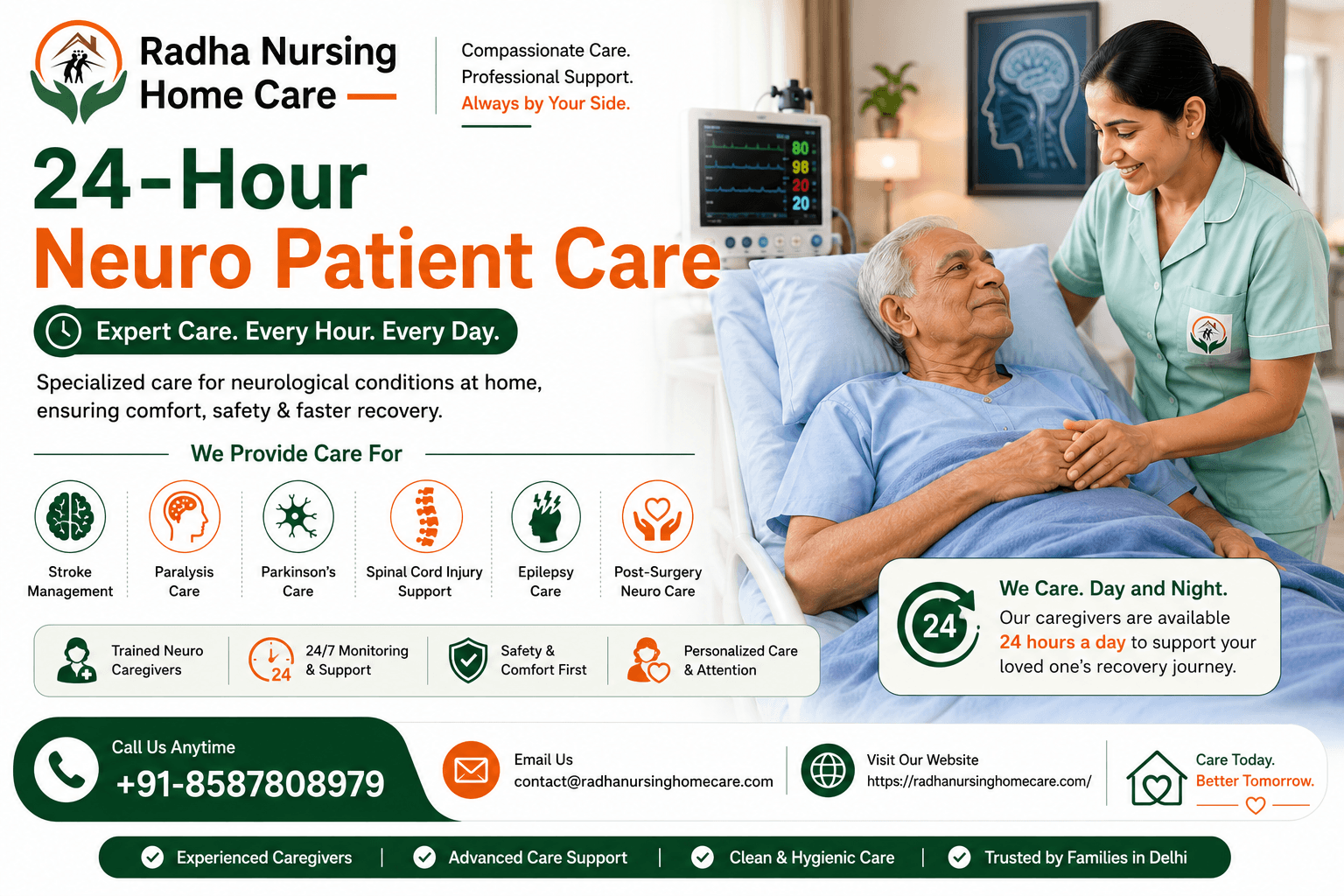
Families looking for Neuro Patient Care at Home Delhi can discuss the patient’s diagnosis, mobility, feeding requirements, nursing needs, working hours, and rehabilitation plan with a suitable home-care provider.
Radha Nursing Home Care can be considered when families are exploring home-based patient care and nursing support. The exact service should be selected according to the patient’s condition and the recommendations of the treating healthcare professionals.
Whether the patient needs a caretaker, professional nurse, physiotherapy support, or a combination of services, clearly defining the care requirements before starting can help create a more effective arrangement.
Final Thoughts
So, what is included in 24-hour neuro patient care in New Delhi?
Depending on the patient’s condition, it may include personal care, feeding assistance, mobility and transfer support, repositioning, hygiene, medication support, vital-sign monitoring, catheter-related care, night-time supervision, companionship, and coordination with rehabilitation professionals.
However, there is no single package suitable for every neurological patient.
A person recovering from a mild stroke may need limited assistance, while a bedridden patient with paralysis or complex neurological needs may require continuous professional nursing support.
The safest approach is to begin with an assessment by the treating healthcare team, clearly define the patient’s needs, and then select a qualified home-care provider capable of providing the appropriate level of support.
Frequently Asked Questions
It can include personal hygiene, feeding assistance, mobility support, repositioning, companionship, night-time supervision, medication support, and monitoring. Professional nursing services may additionally include clinical procedures within the nurse’s scope.
Patients with significant mobility limitations, paralysis, severe post-stroke disability, complex neurological conditions, or substantial dependence on others may require continuous care. The exact need should be assessed by healthcare professionals.
No. A caretaker primarily provides daily-living and personal assistance. A qualified nurse provides professional nursing care and can perform appropriate clinical tasks within their scope of practice.
Many medically stable stroke patients can receive nursing and rehabilitation support at home. The treating medical team should determine whether home care is appropriate.
Not automatically. Physiotherapy is a specialized service and may need to be arranged separately with a qualified physiotherapist. Some integrated home-care programs combine nursing and rehabilitation services.
Yes. Caregivers or nurses may assist with feeding according to the patient’s care plan. Patients with swallowing difficulties or feeding tubes require specific professional guidance and training.
Depending on the patient’s condition, equipment may include a hospital bed, wheelchair, pressure-relieving mattress, walker, monitoring devices, oxygen equipment, or suction equipment.
Yes. Home healthcare providers in Delhi NCR advertise 24-hour nursing, caregiver, and neurological rehabilitation services, although availability, staffing, qualifications, and service coverage vary between providers.
Check caregiver or nurse qualifications, neurological-care experience, background verification, service responsibilities, replacement arrangements, supervision, emergency procedures, and pricing.
Yes. Structured home care can assist with daily activities, safety, mobility, personal care, and following the patient’s established treatment and rehabilitation plan. The level of support should be reviewed as the patient’s condition changes.