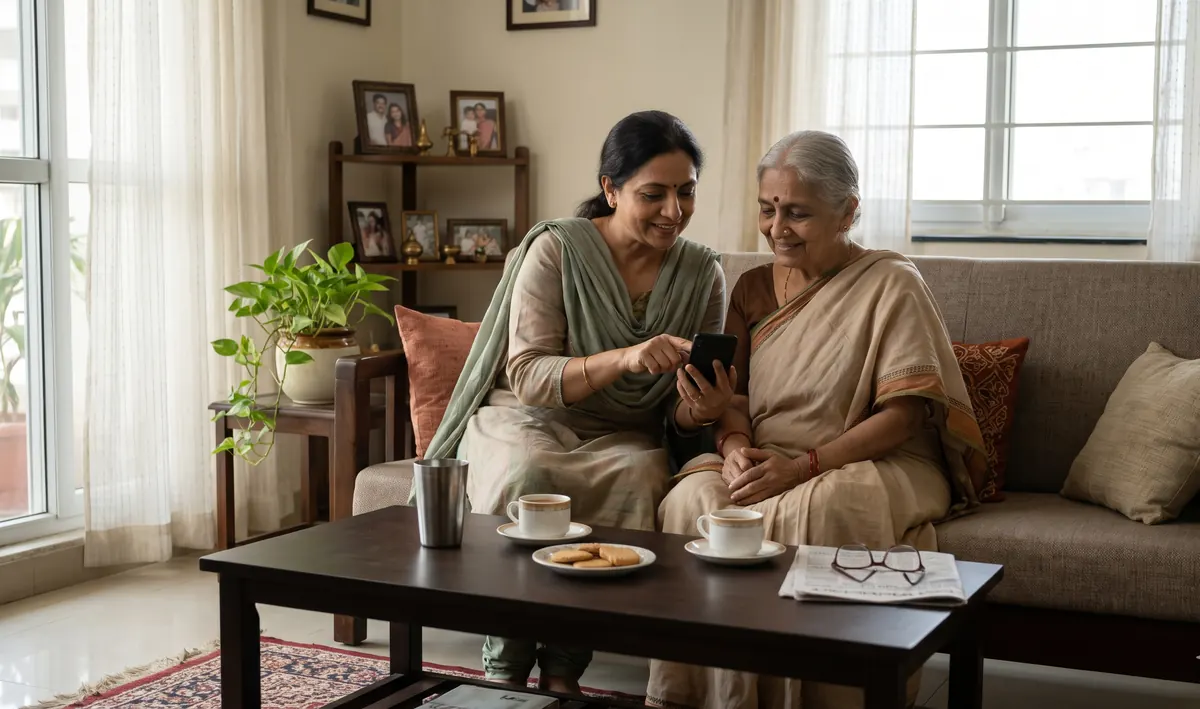
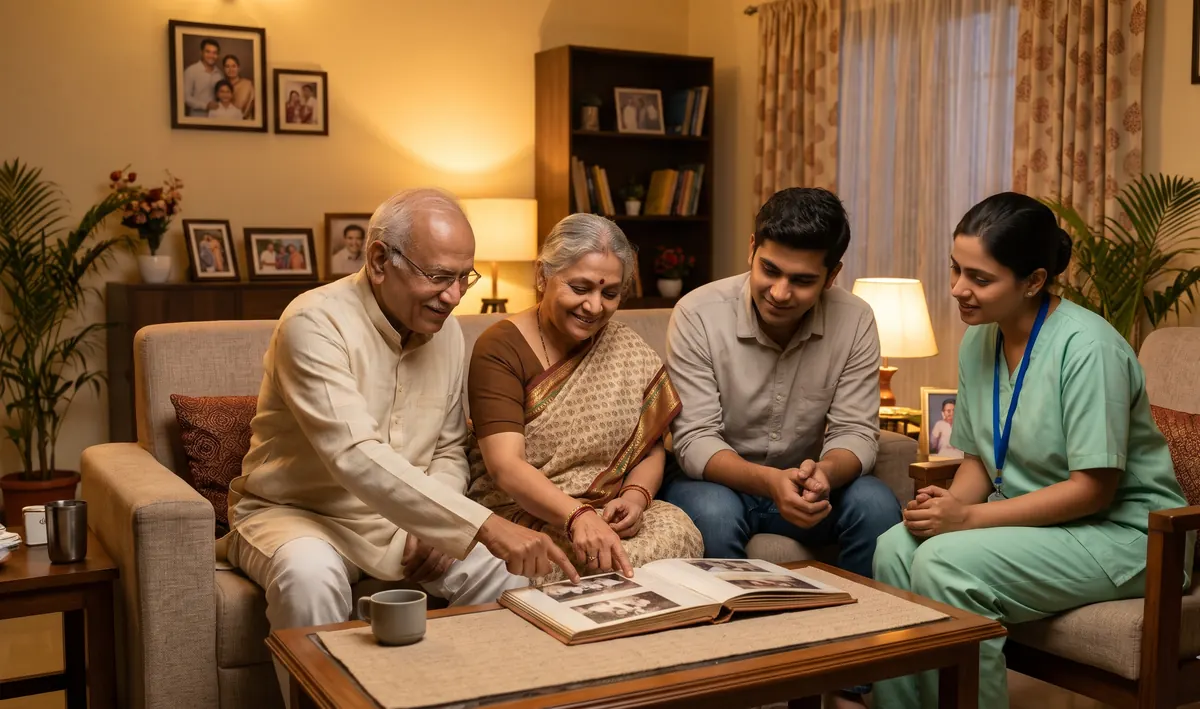
Deciding how to look after an elderly parent is one of the hardest choices a family makes. In India, the conversation often starts with a worry: “Who will look after Papa when we are at work?” and ends with two options on the table. One is an old age home. The other is care at home with a live-in caregiver.
Both can be the right answer for the right person. This guide compares them honestly, so you can choose with a clear head and without guilt. We provide 24-hour live-in care at home, so we are not neutral, but we will tell you where an old age home may suit your parent better.
What an old age home offers
An old age home is a residential facility where senior citizens live together. Typically it offers shared or private rooms, meals, basic supervision and company of people of the same age. Some places have visiting doctors or nurses. The quality varies a lot from one home to another, so visiting in person matters.
Old age homes can suit seniors who are largely independent, enjoy company and want a community around them, or who have no family nearby.
What 24-hour home care offers
With home care, your parent stays in their own home, and a trained caregiver lives with them day and night. The caregiver helps with medicines as prescribed, meals, bathing and dressing, safe movement, and keeps your parent company. The family stays close and involved, and the patient keeps their own room, neighbours, food and routine.
You can read more about this on our Old Age Care service page.
Side-by-side
| Old age home | 24-hour home care | |
|---|---|---|
| Where your parent lives | A new place with new people | Their own home |
| One-to-one attention | Shared among residents, depends on staffing | One caregiver focused on one person |
| Routine and food | Facility’s timings and menu | Your parent’s own habits and home food |
| Family involvement | Visits within allowed hours | Family can be around any time |
| Company of peers | Often a big plus | Company mostly from family and caregiver |
| Adjustment period | Can be hard, especially for people with memory problems | Minimal, since the surroundings are familiar |
| Privacy | May be shared | Full privacy of home |
The emotional side matters
For many older people, home is not just a building. It is the neighbours who say hello, the kitchen smells, the photographs on the wall, the corner of the sofa that is theirs. Moving away from all of this can be stressful, and people living with dementia or confusion often find a new place especially unsettling. If your parent says clearly that they want to stay at home, that wish should carry real weight.
At the same time, some seniors feel lonely at home and enjoy the company of a community. Ask your parent what they would like before you decide. The World Health Organization’s fact sheet on ageing and health also highlights the importance of social connection and a supportive environment for older people.
When an old age home may be the better choice
- Your parent is fairly independent and actively wants a community of friends.
- There is no suitable home, or the house is unsafe or hard to manage even with help.
- Your parent has no family nearby and prefers a shared setting.
- Round-the-clock medical supervision is needed that only a hospital-like setting can offer.
When home care is usually the better choice
- Your parent is attached to their home, and moving would cause stress.
- They need steady one-to-one help with medicines, meals, hygiene or movement.
- They are recovering from surgery, a fracture or a stroke and need a calm place to heal.
- They are forgetful or confused and do best in familiar surroundings.
- The family wants to stay close and involved every day.
Questions to ask before choosing an old age home
If you decide to look at old age homes, visit more than once, at different times of the day, and ask:
- How many staff are on duty during the day and at night, and for how many residents?
- What medical support is available, and what happens in an emergency?
- Can we see the rooms, kitchen and bathrooms, and speak to current residents or families?
- How are medicines managed and recorded?
- What are the visiting rules, and can residents go home for festivals?
- What is the written agreement, and under what conditions can it be ended?
Questions to ask before choosing home care
- How is the caregiver verified, and can we see identity documents?
- Is the care 24-hour live-in, and how will the caregiver’s rest and relief work?
- What can the caregiver do, and what must the doctor or a clinical nurse do?
- What happens if the caregiver is not a good fit?
- Who do we call when we have a concern, and how quickly will the agency respond?
A note on cost
Families understandably want to compare costs. We do not publish fixed rates in articles because they depend on the kind of care and the level of support needed. When you compare, make sure you are comparing the same scope: a room and meals in a home are not the same as one dedicated caregiver at home. Ask for written quotes and a clear list of what is included.
You can also start small and review
This is not a once-in-a-lifetime decision. Some families start with home care, see how their parent responds, and review after a few weeks or months. Others discover that an old age home is a better fit later. What matters is to keep checking, listening to your parent and adjusting.
Getting the family on the same page
In many families, the decision about a parent’s care is not made by one person. Siblings may live in different cities, each with their own view. A calm family meeting, where everyone hears the parent’s wishes first, can save a lot of tension later. Write down what the doctor has advised, what each option involves and who will take responsibility for what. For practical tips on sharing the load, the National Institute on Aging’s caregiving guide has useful advice on family communication and avoiding caregiver burnout.
Related reading
- Nursing home vs home nursing care: which is right for your parent in Delhi?
- 24×7 elder care in Delhi: when is it time to hire one?
- How to choose the right caretaker for elderly loved ones in Delhi
- What to look for in an elderly care service in Delhi
Frequently asked questions
Is home care better than an old age home for dementia?
Many people with memory problems feel calmer in familiar surroundings, but each case is different. Ask your doctor what is suitable, and keep the routine steady and simple.
Can a caregiver live in a small flat?
Yes, as long as there is a safe place for the caregiver to rest and eat. Many families in Delhi NCR arrange this in a flat with a spare corner or room.
Do you work with old age homes?
No. We provide care at the patient’s own home. We are not affiliated with any hospital or old age home.
Let us talk it through
If you are weighing these options for your parent, call us for a simple, honest conversation. We serve families across Delhi NCR, including Noida, Gurugram, Faridabad and Ghaziabad.
Call +91-8587808979 or message us on WhatsApp. You can also use our Contact Us page.