Families often ask us the same question before hiring: “What will the caregiver actually do all day?” It is a fair question. A live-in caregiver is someone who will share your home, so it helps to picture an ordinary day.
Every patient is different, and the routine always follows the doctor’s advice and the family’s wishes. But here is what a typical day with a 24-hour live-in caregiver can look like.
Early morning
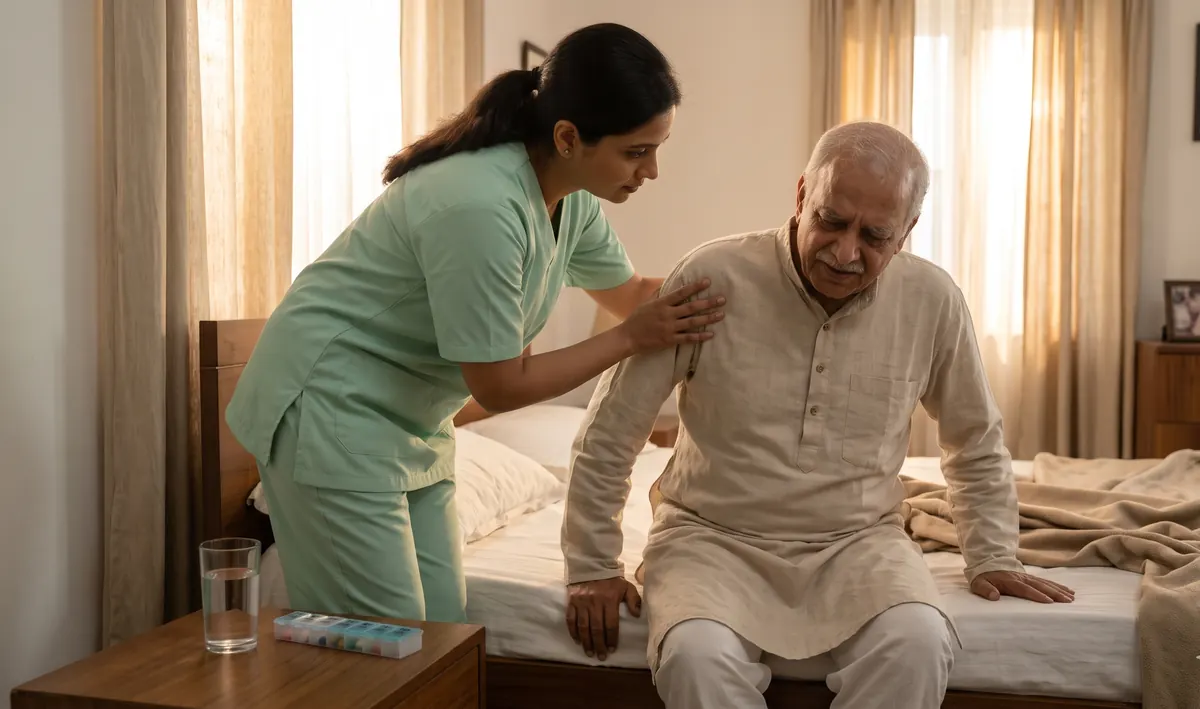
The day usually begins gently. The caregiver helps the patient wake up, sit up safely and use the bathroom. For patients who cannot get up, this is the time for a wash, fresh clothes and a change of position, done with care and privacy. The room is aired, the bedding is straightened and the first fluids of the day are offered.
Medicines and checks
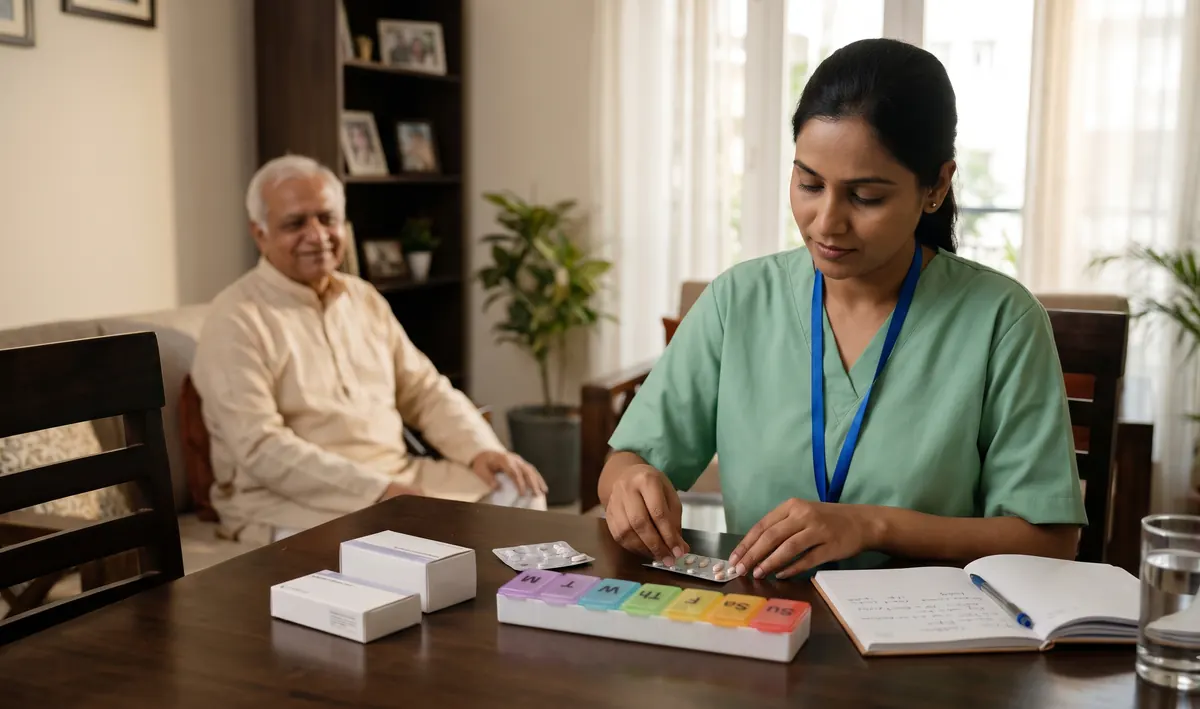
Medicines are given at the times the doctor has prescribed, from a labelled box or organiser. Where the doctor has asked for it, the caregiver also notes temperature, pulse, blood pressure or blood sugar in a small notebook. The notebook is simple but powerful: it gives the family and the doctor a clear picture of how the patient has been, day by day.
Breakfast and the morning
Meals are served as per the diet advice, and the caregiver helps the patient eat, drink and stay hydrated. After breakfast, there may be gentle movement as the doctor allows, a little time by the window, or company and conversation. For many older people, this unhurried company is as important as any medicine.
Midday
Lunch, medicines if due, and rest. A caregiver keeps the room clean and comfortable, helps with toileting and keeps an eye on small things: a cough, a red patch of skin, a drop in appetite. If anything seems different, the family is told quickly.
Afternoon
This is often a quiet part of the day. The patient may sleep, watch television, listen to bhajans or talk with family. The caregiver stays close, prepares tea or a light snack and helps with any visitors or doctor’s calls.
Evening
Dinner is usually early and light, followed by evening medicines. The caregiver helps with washing up for the night, comfortable clothes and a settled bed, because a calm evening usually means a better night.
Night
This is where live-in care matters most. If the patient needs help to use the bathroom, wakes up confused or is uncomfortable, someone is right there. The caregiver rests in the house, but is close by and ready to help, and wakes if there is a need. That is very different from care that ends at a fixed time in the evening.
Why a steady routine matters so much
A routine is not about being strict. For a patient who is weak, forgetful or recovering, it is a form of comfort. When breakfast, medicines, rest and the evening wash-up happen at roughly the same time each day, the patient knows what to expect and feels safer. Older people living with memory problems, in particular, often become calmer when the day follows a familiar pattern. The National Institute on Aging’s caregiving guide also stresses planning and structure as ways to make caregiving easier for everyone involved.
A live-in caregiver is well placed to build this routine, because they are present for every part of the day, learn what the patient enjoys and dislikes, and can adjust gently when the patient is tired or unwell.
How the family and the caregiver share information
Good care is a conversation, not a handover. Most families settle into a simple system that works well in the first few weeks:
- A daily notebook. Medicines given, meals eaten, fluids taken, sleep, any readings the doctor has asked for and any change in mood or comfort are written down by the caregiver each day.
- A quick evening update. A short call or message to the family member in charge, so that small worries are shared the same day.
- A weekly check-in. A short sit-down once a week to talk about what is working, what is not and what the doctor has said.
- One main contact. It helps if one person in the family is the caregiver’s point of contact, so instructions do not get mixed up.
What a good first week looks like
The first week is about learning each other. On the first day, share the doctor’s instructions, the medicine list and the emergency numbers, and walk the caregiver through the house. Over the next few days, let the caregiver watch the family’s own routine before changing anything. Expect some awkwardness; it usually settles quickly when the family is kind, clear and patient. Our guide on what is included in 24-hour home nursing care in Delhi gives a fuller picture of what to expect.
How live-in care differs from visiting help
Visiting help, such as someone who comes for a few hours, can be useful for specific tasks. But it leaves gaps: the early morning before the helper arrives, the evening after they leave and the whole night. A patient who is unsteady on their feet, anxious in the dark or dependent on regular medicines is most at risk in those gaps. A live-in caregiver closes them. That continuity is the main reason we provide 24-hour live-in care only and do not offer hourly or 12-hour shifts. You can read more in our post on 24-hour patient care taker services in Delhi.
Respect, privacy and boundaries
A caregiver is a professional who happens to live in your home. A few simple courtesies make the arrangement comfortable for both sides:
- Give the caregiver a clean, private place to rest and keep their belongings.
- Share family routines, such as mealtimes, visitors and prayer times, so there are no surprises.
- Let the caregiver know which areas of the house are open to them and which are private.
- Speak kindly, say thank you and raise concerns calmly and early.
- Respect the patient’s dignity: knock before entering, keep bathing and toileting private, and speak to the patient as an adult.
Tips to make each day smoother
- Keep medicines in one labelled organiser with morning, afternoon and night boxes.
- Keep the doctor’s number, the hospital number and 112 written on a card near the phone.
- Agree early on mealtimes and who cooks, so food does not become a source of stress.
- Plan visitors and doctor appointments in advance, so the routine is not disturbed.
- Check in on the caregiver’s wellbeing too. A rested caregiver is a more patient caregiver.
A caregiver needs rest too
A good arrangement is fair for everyone. A live-in caregiver needs proper meals, sleep and a little time to themselves. When families plan this together at the start, the caregiver stays alert, kind and reliable. Please speak to your agency about how rest and weekly relief will work before the caregiver joins.
What the caregiver does not do
Our caregivers support daily care and follow your doctor’s advice. They do not replace your doctor, change treatment on their own, or take on tasks that need a specialist doctor. We also do not provide physiotherapy.
Related reading
- Can a caregiver give injections or IV at home? Understanding the limits
- Nursing home vs home nursing care: which is right for your parent?
- How do I find a patient care taker for my parent in Delhi?
- What to look for in an elderly care service in Delhi
For wider background on healthy ageing and why support at home matters, the World Health Organization’s fact sheet on ageing and health is a trusted place to start.
Want to know more?
Read about our Patient Care Taker service and our Old Age Care service, or call us and tell us about your family. We serve Delhi NCR, including Faridabad, Ghaziabad and Greater Noida.
Call +91-8587808979 or message us on WhatsApp. You can also reach us from the Contact Us page.