
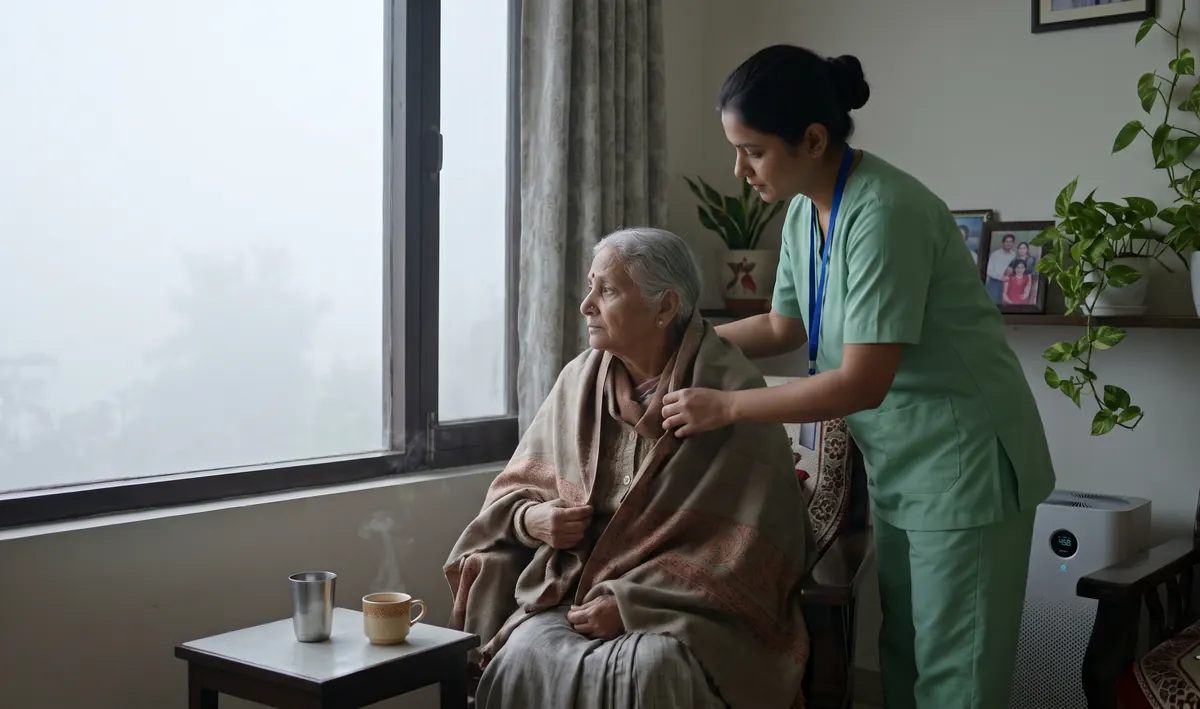
Every year, as the Delhi winter settles in, many families notice the same thing: a parent who was doing fine in October becomes more tired, coughs more, sleeps badly or simply refuses to leave the bed. The cold, the fog and the smog are hard on everyone, but they are hardest on older people and on patients who are already unwell.
This guide is for families who are looking after a senior parent at home in Delhi NCR. It does not replace your doctor’s advice, but it gives you a calm, practical plan for the next few months.
Why winter and smog are harder on seniors
As we age, the body finds it harder to keep warm, and the lungs and heart have less reserve. Cold weather can make blood vessels narrow, which may push blood pressure up. Polluted air can irritate the airways, especially in people with asthma, COPD or heart disease. The World Health Organization’s fact sheet on outdoor air quality and health explains why air pollution matters for lung and heart health, and the National Institute on Aging’s cold weather guide lists simple ways older adults can stay safe in the cold.
The practical message is simple: in winter, small problems can grow quickly in older people, so it pays to watch more closely.
A simple winter plan for the home
1. Keep the room warm, but safely
Aim for a room that feels comfortably warm, not hot. Layer clothing, use a soft blanket and keep the feet and head covered at night. If you use a room heater, keep it well away from the bed and curtains, never leave it running unattended and make sure there is some fresh air. Our separate guide on heater safety covers this in more detail.
2. Watch the air, not just the temperature
On days when the air quality is poor, keep windows closed during the worst hours and avoid long outdoor walks. Many families use an air purifier in the main room where the senior spends most of the day. Check the daily air quality reading on an official app such as those run by the Central Pollution Control Board or SAFAR, and plan the day around it.
3. Make medicines the top priority
Winter is not the time to skip or change doses without asking the doctor. Keep medicines in a labelled organiser and give them at the same times every day. If your parent has asthma, COPD, diabetes, high blood pressure or a heart condition, ask the doctor whether any winter-time adjustments are needed.
4. Check blood pressure and breathing regularly
Cold weather can affect blood pressure. If your parent already has a home blood pressure monitor, ask the doctor how often to check it and what readings should prompt a call. Note any new cough, breathlessness, wheeze or unusual tiredness, and share it with the doctor early.
5. Keep the body moving, indoors
Staying in bed all day weakens muscles and raises the risk of falls and chest infections. Encourage gentle indoor movement as the doctor allows: walking around the room, simple stretches while seated, or standing at the window for some sunlight. For patients who cannot get up, ask the doctor how often to change their position in bed.
6. Food and fluids
Older people often drink less in winter because they do not feel thirsty. Offer warm water, soup, dal, khichdi, tea or milk through the day, following any diet or fluid limits the doctor has given. Warm, simple, easy-to-digest meals usually suit older appetites best.
7. Be careful with mornings and evenings
Early mornings and late evenings are often the coldest and most polluted parts of the day. If your parent likes a walk, wait for the sun to come out and the air to improve, and use a proper mask when going out if the doctor has recommended one.
Warning signs: when to call the doctor
Please call the doctor, or in an emergency call 112, if you notice:
- Fast or difficult breathing, a bluish tinge on the lips, or chest pain
- Sudden confusion, extreme drowsiness or unusual behaviour
- Fever, a cough that is getting worse, or phlegm that changes colour
- Very high or very low blood pressure readings, as advised by the doctor
- Cold, pale or clammy skin and shivering that does not settle
How a 24-hour live-in caregiver helps in winter
Winter is the season when many families discover that checking in by phone is not enough. A caregiver who lives in the house can notice the small changes: a new cough in the morning, a missed meal, a blanket that has slipped off at 3 AM. At Radha Nursing Home Care we provide 24-hour live-in care only. The caregiver stays day and night, helps with medicines as prescribed, warm meals and fluids, safe movement, hygiene and company, and tells the family promptly if anything changes.
Our caregivers support daily care and follow your doctor’s advice. They do not replace your doctor or change treatment. We also do not provide physiotherapy. You can read about our Old Age Care service and our Home Nursing Care service.
Staying steady on cold floors and in the dark
Falls are more common in winter. Cold floors, stiff joints, heavy clothing, early darkness and dizziness after standing up quickly all raise the risk. Simple habits help: sit on the edge of the bed for a minute before getting up, use slippers with a good grip, keep a night light on the way to the bathroom, and keep floors dry and free of loose rugs. The World Health Organization’s fact sheet on falls explains why falls matter so much for older people, and why prevention is worth the effort.
Related reading
- Delhi AQI and older adults: protecting a parent with asthma or COPD at home
- Cold wave checklist for elderly parents living alone in Delhi NCR
- Elderly care services in Delhi: daily support and safety guide
- 24×7 elder care in Delhi: when is it time to hire one?
Frequently asked questions
Should an elderly person go out for a morning walk in smog?
On days with poor air, it is usually safer to stay indoors, especially for people with lung or heart problems. Ask your doctor what is right for your parent.
How do I keep a bedridden patient warm without overheating?
Use light layers and a blanket rather than very heavy covers, keep the room draught-free and check that the skin is warm but not sweaty. Never place a heater close to the bed.
Is a caregiver available in winter at short notice?
Availability depends on the type of care needed. Call us with your requirement and we will arrange a suitable caregiver as early as we can.
Need support this winter?
If caring for your parent through the cold months feels like too much to manage alone, we can help. We serve families across Delhi NCR, including Noida, Gurugram, Ghaziabad and Faridabad.
Call +91-8587808979 or message us on WhatsApp. Visit our Contact Us page for more ways to reach us.

