Every winter, many Delhi families notice that an older parent seems more tired, gets dizzy on standing, or complains of headaches in the cold early morning hours. For someone who already lives with high blood pressure or a heart condition, winter deserves extra attention. Here is what is worth knowing about cold weather and blood pressure in older people, and what a family member or caregiver can keep an eye on.
It is general information and does not replace your doctor’s advice. Only the doctor can say what readings are right for your parent and whether any medicine needs to change.
Why cold weather matters for older people
As we age, the body finds it harder to keep warm and to adjust quickly when the temperature drops. In cold weather, the small blood vessels near the skin can narrow to save heat, and this may push blood pressure up in some people. The National Institute on Aging’s cold weather guide explains how older adults lose body heat faster and why even a mildly cool room can become a problem. The World Health Organization’s fact sheet on hypertension is a good, plain introduction to high blood pressure and why it needs regular care.
Winter can also change habits. People walk less, eat heavier or saltier food, drink less water, sleep badly and sometimes skip a dose when routines are disturbed. All of these can matter more than the temperature itself.
Common winter changes you may notice
- Headaches or a heavy feeling in the head in the early morning
- Dizziness or light-headedness when getting out of bed
- More tiredness, poor sleep or a restless night
- Cold hands and feet, and a pale or bluish tinge to the fingertips
- Swollen ankles or a feeling of breathlessness when walking indoors
- Reduced appetite and less interest in drinking water
None of these prove a blood pressure problem, but they are good reasons to tell the doctor early rather than wait.
What a caregiver can do, and cannot do
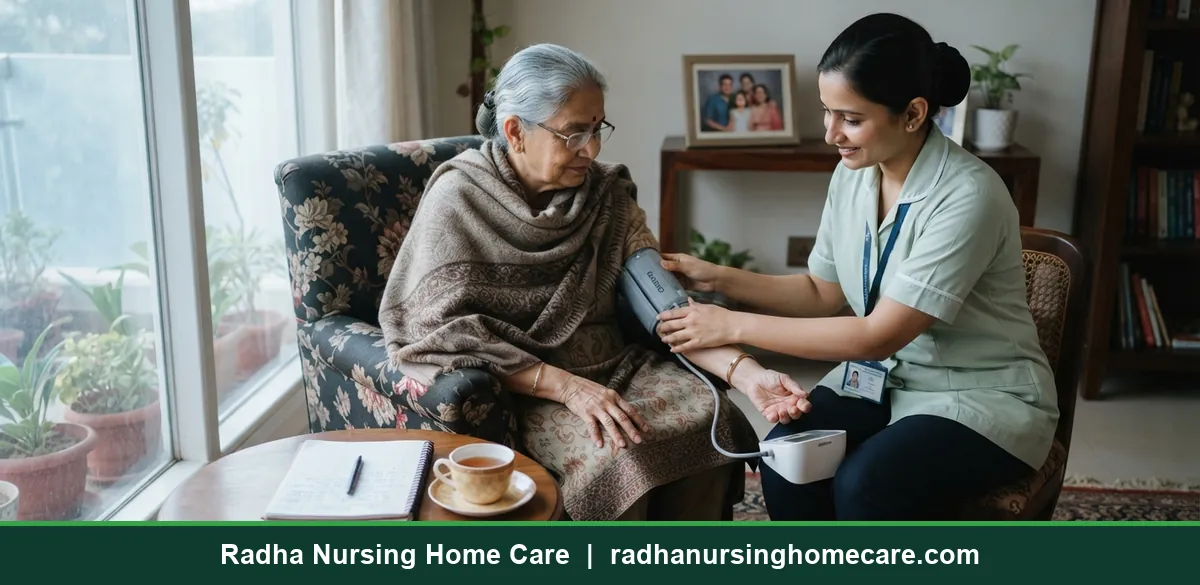
A trained caregiver can be a valuable extra pair of eyes. At Radha Nursing Home Care, our caregivers support daily care and follow your doctor’s advice. If the doctor has asked for blood pressure readings at home, the caregiver can take them at the agreed times with the family’s monitor and write them in a notebook. The caregiver does not interpret the numbers, change medicines or decide on doses. That belongs to the doctor.
If a reading falls outside the range the doctor has given, or if the patient feels unwell, the caregiver tells the family straight away so the doctor can be called.
How to take a home reading properly
A reading is only useful if it is taken the same way each time. Ask the doctor to show you the right method, and follow these general habits:
- Let the patient sit quietly in a comfortable chair for a few minutes before the reading.
- Use the same arm, at heart level, with the cuff on bare skin or thin clothing.
- Avoid taking a reading right after a walk, a bath, tea, a smoke or a heated argument.
- Keep the room warm, because a cold room can affect the result.
- Write down the date, the time, the reading and any symptoms, such as dizziness or headache.
- Take it at the times the doctor has suggested, not “whenever the patient feels odd”.
Bring the notebook to every doctor visit. It gives the doctor a much clearer picture than a single reading in the clinic.
Keeping the home warm without causing new risks
- Layer clothing instead of overheating one room. A shawl, socks and a cap often work better than a strong heater.
- If you use a heater, keep it away from the bed, curtains and clothes, and switch it off before sleeping.
- Keep some fresh air in the room, especially if anything is burning for heat.
- Warm the bathroom a little before bathing, and avoid very hot or very cold water.
- Use slippers with a good grip on cold floors to prevent falls. The WHO fact sheet on falls explains why prevention matters for older people.
Medicines: the most important rule
Never stop, skip or change blood pressure tablets because a reading looks good or because winter has arrived. Some people feel “fine” and decide they no longer need the medicine, which can be risky. Keep tablets in one labelled organiser with morning, afternoon and night boxes, and give them at the same time every day. The National Institute on Aging’s guide to medication management offers more practical tips on organising medicines safely.
If your parent has a sudden change in routine, such as a festival fast or a trip, speak to the doctor beforehand about how medicines should be taken.
Food, water and movement in winter
- Offer warm water, soup, dal, khichdi, milk or tea through the day, within any fluid limits the doctor has set.
- Go easy on very salty pickles, snacks and packaged foods, and follow the doctor’s diet advice.
- Encourage gentle indoor movement as the doctor allows: a few slow walks around the room, seated stretches or standing at a sunny window.
- Avoid early morning and late evening walks in fog and smog. Our guide on senior care at home in Delhi in winter and smog explains how to plan the day around the air quality.
Warning signs: call the doctor or 112
Call the doctor urgently, or call 112 in an emergency, if you see any of these:
- A sudden, severe headache or chest pain
- Weakness or numbness in the face, arm or leg, a drooping face, or slurred speech
- Sudden confusion, fainting or trouble seeing
- Difficulty breathing or a blue tinge on the lips
- A reading that the doctor has told you is a reason to call
Do not wait to see whether it passes. Quick action matters most in these situations.
Why live-in care helps in winter
Winter problems often start quietly: a missed tablet, a skipped meal, a cold room at 3 AM, a slow decline in appetite. A caregiver who lives in the house can notice these small changes and tell the family early. Our care is 24-hour live-in only, with no hourly or 12-hour shifts, since winter trouble tends to start in the early morning and at night. Read more on our Old Age Care page. Physiotherapy, injections and IV treatment are not part of what we do.
Related reading
- Cold wave checklist for elderly parents living alone in Delhi NCR
- Delhi AQI and older adults with asthma or COPD
- What does a live-in caregiver’s day look like?
- Home nursing care in Noida
Frequently asked questions
Does cold weather always raise blood pressure?
Not always, and it differs from person to person. That is why regular readings, taken as the doctor advises, are more useful than guessing.
Should my parent take extra medicine if the reading is high one morning?
No. Never take extra or different medicine without asking the doctor. Note the reading and the symptoms and call the clinic.
Can a caregiver measure blood pressure?
Yes, when the doctor has asked for readings, the caregiver can take and record them. The doctor decides what the numbers mean.
Need support this winter?
If you are worried about your parent’s health through the cold months, talk to us. We serve Delhi NCR, including Noida, Gurugram, Faridabad and Ghaziabad.
Call +91-8587808979 or message us on WhatsApp. Visit our Contact Us page to reach us.