
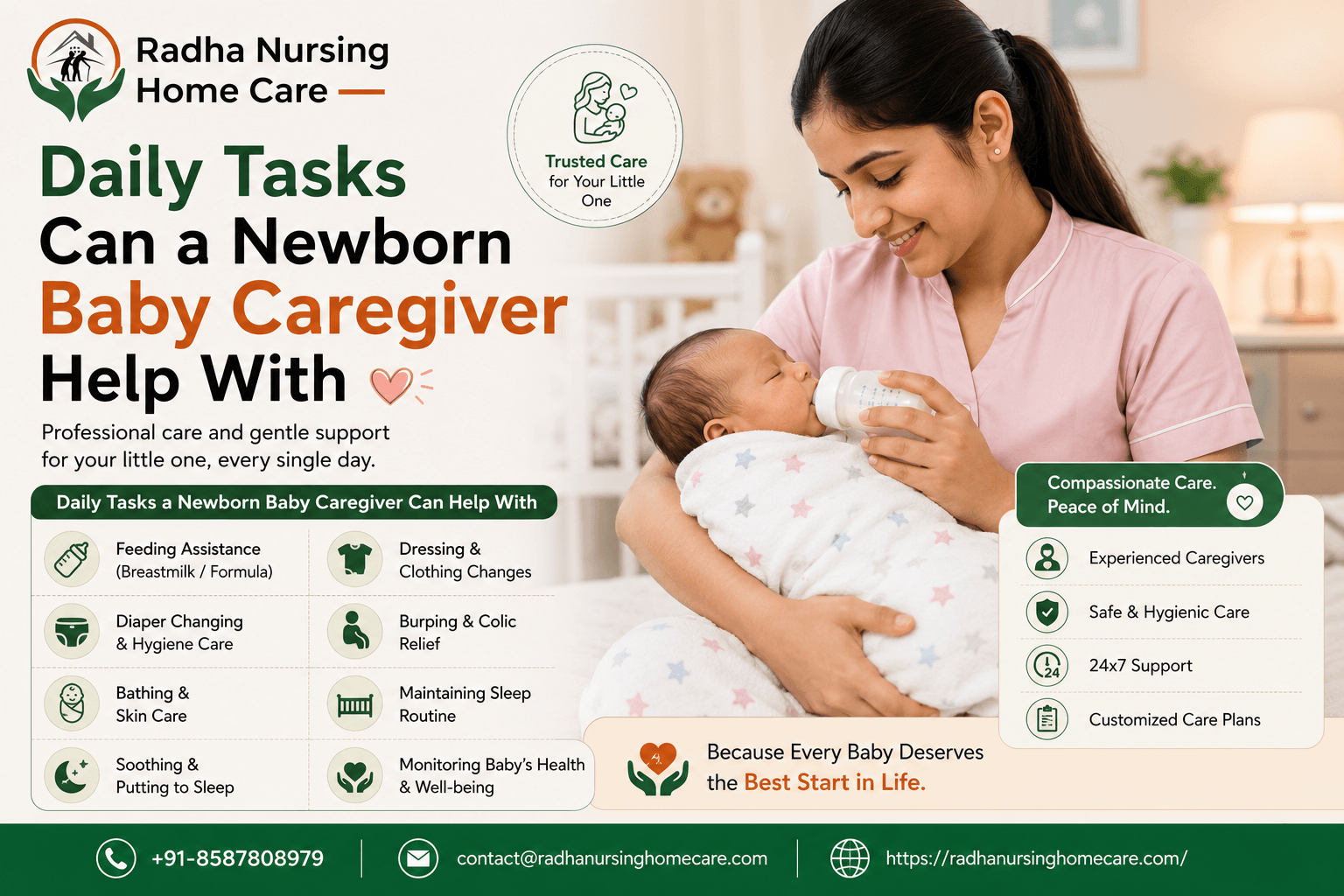
Having a newborn at home can be a joyful experience, but the first few weeks and months can also be demanding for parents. Newborns need frequent feeding, regular diaper changes, careful hygiene, soothing, sleep support and close attention throughout the day and night.
For new parents, managing these responsibilities alongside household tasks and recovery after childbirth can become challenging. A newborn baby caregiver can provide practical day-to-day assistance while parents remain involved in their baby’s care.
Families looking for Baby Care Taker Services at Home in Delhi NCR should understand exactly what a caregiver can and cannot do. The responsibilities can vary depending on the baby’s age, the family’s requirements and the caregiver’s training.
This guide explains the common daily tasks a newborn baby caregiver can help with at home.
What Does a Newborn Baby Caregiver Do?
A newborn baby caregiver provides practical support with the baby’s everyday routine. The caregiver’s role is generally focused on the baby’s comfort, hygiene, feeding support, sleep routine and basic daily needs.
Depending on the arrangement, a caregiver may help with:
- Feeding support
- Burping
- Diaper changes
- Baby bathing and hygiene
- Changing clothes
- Sleep and settling routines
- Holding and soothing the baby
- Preparing baby-related items
- Washing baby clothes and feeding equipment
- Maintaining a clean baby-care environment
- Accompanying parents during routine baby-care activities
A caregiver does not replace a pediatrician or other qualified medical professional. Any medical concern should be discussed with the baby’s pediatrician.
1. Feeding Support
Newborns generally require frequent feeds, which can make feeding schedules demanding for parents.
A caregiver can provide practical assistance around feeding time, depending on the family’s preferred feeding method.
This may include:
- Bringing the baby to the parent for breastfeeding
- Helping with positioning and settling after feeding
- Preparing bottles when appropriate
- Cleaning feeding equipment
- Recording feeding times if the family uses a feeding log
For breastfeeding mothers, the caregiver can help with practical tasks so that the mother can focus on feeding the baby comfortably.
A caregiver should follow the parents’ and pediatrician’s instructions regarding feeding.
2. Burping After Feeding
Some babies need help settling after a feed.
A newborn caregiver can hold the baby safely and assist with burping according to the family’s established routine.
The caregiver can also help keep the baby comfortable after feeding and alert the parents if the baby appears unusually unsettled or has difficulty feeding.
3. Diaper Changing
Frequent diaper changes are a normal part of newborn care.
A caregiver can help parents manage this routine by:
- Changing diapers
- Cleaning the baby appropriately
- Applying products provided or recommended by the parents
- Disposing of used diapers hygienically
- Keeping diaper-changing supplies organized
Regular hygiene is important for maintaining the baby’s comfort.
If the caregiver notices persistent redness, unusual skin changes or another concern, the parents should be informed so that appropriate medical advice can be obtained.
4. Baby Bathing and Hygiene
Newborn hygiene requires gentle handling.
Depending on the family’s preferences and the caregiver’s experience, a caregiver may assist with:
- Baby bathing
- Face and body cleaning
- Hair and scalp care
- Changing clothes
- Keeping the baby’s personal items organized
- General hygiene routines
Parents should establish the bathing routine and provide any products they want the caregiver to use.
If there are concerns about the baby’s skin, umbilical area or any other health issue, parents should consult their pediatrician.
5. Changing the Baby’s Clothes
Newborns may need their clothes changed several times during the day because of feeding spills, diaper leaks or other messes.
A caregiver can help by:
- Selecting clean baby clothes
- Changing the baby’s clothes
- Keeping used clothes separate
- Organizing the baby’s wardrobe
- Preparing clothing for the next routine
This can save parents considerable time during busy periods.
6. Supporting the Baby’s Sleep Routine
Newborn sleep can be unpredictable. Babies may sleep for short periods and wake frequently for feeding or other needs.
A caregiver can help establish a calm environment around the baby’s sleep routine by:
- Preparing the baby’s sleeping area
- Helping settle the baby
- Reducing unnecessary disturbances
- Following the parents’ established routine
- Monitoring the baby while the caregiver is responsible for the baby
Safe sleep practices should always be followed. Babies should be placed in a safe sleep environment according to current pediatric recommendations.
A caregiver should never introduce unsafe sleep practices simply because they were used traditionally or recommended by someone without appropriate expertise.
7. Soothing and Comforting the Baby
Newborns cry for many reasons, including hunger, tiredness, discomfort and the need for closeness.
A caregiver can help soothe the baby by:
- Holding the baby appropriately
- Gentle rocking when appropriate
- Speaking calmly
- Helping with burping
- Checking whether the baby needs a diaper change
- Bringing the baby to the parent when feeding or other parental attention is required
If a baby is persistently crying or appears unwell, parents should assess the situation and seek medical advice when necessary.
8. Preparing Baby-Care Items
Newborn care involves many small tasks throughout the day.
A caregiver can help parents prepare commonly used items, such as:
- Diapers
- Baby clothes
- Burp cloths
- Blankets
- Feeding equipment
- Towels
- Baby-care supplies
Keeping these items organized can make daily routines more efficient.
9. Cleaning and Organizing Baby Items
Depending on the agreed responsibilities, a newborn caregiver may help maintain baby-related items.
This can include:
- Washing baby clothes
- Cleaning appropriate feeding equipment
- Organizing diapers and supplies
- Keeping the baby’s room or care area tidy
- Separating clean and used baby items
The caregiver should follow the family’s hygiene procedures and any instructions from healthcare professionals.
10. Keeping Track of the Baby’s Routine
Some parents find it helpful to maintain a simple record of the baby’s daily routine.
A caregiver may help record:
- Feeding times
- Diaper changes
- Sleep periods
- Bathing
- Other routine observations
This information can help parents understand the baby’s routine and can also be useful when discussing concerns with a pediatrician.
However, routine observations are not a substitute for professional medical assessment.
11. Helping Parents During Night-Time Care
Night-time newborn care can be particularly tiring.
Depending on the arrangement, a caregiver may provide practical assistance during the night, such as:
- Helping settle the baby
- Changing diapers
- Bringing the baby to the breastfeeding parent
- Preparing feeding equipment where appropriate
- Helping with post-feeding settling
- Keeping essential baby-care items organized
Families considering 24-hour newborn baby care should clarify exactly which night-time responsibilities are included before hiring a caregiver.
12. Supporting Mothers After Delivery
Newborn care and maternal recovery often happen at the same time.
A caregiver can reduce the mother’s workload by taking care of practical baby-related tasks.
For example, while the mother rests or feeds the baby, the caregiver may help with:
- Diaper changes
- Baby clothing
- Baby laundry
- Organizing supplies
- Settling the baby
- General baby-care assistance
This can be particularly useful for families during the early weeks after delivery.
What a Newborn Caregiver Should Not Do
It is important to understand the boundaries of a caregiver’s role.
A newborn caregiver should not independently:
- Diagnose a baby’s illness
- Prescribe medication
- Change prescribed treatment
- Make medical decisions
- Ignore symptoms that require medical attention
- Substitute for a pediatrician
If a baby develops concerning symptoms, parents should contact their pediatrician or seek appropriate medical care.
Newborn Caregiver vs Nanny vs Babysitter
Families often use these terms interchangeably, but the expected responsibilities can differ.
A newborn caregiver generally focuses on the specific needs of a newborn, including feeding support, hygiene, diapering, settling and daily routines.
A nanny may provide broader childcare and household-related support depending on the arrangement.
A babysitter typically provides temporary supervision and childcare for a defined period.
Families searching for Nanny Services Delhi or Babysitter services in Delhi should therefore clarify the baby’s age and the exact responsibilities they need before selecting a service.
How to Choose a Newborn Baby Caregiver in Delhi NCR
Before hiring a caregiver, families should ask:
- Does the caregiver have experience with newborn babies?
- What training has the caregiver received?
- What tasks are included in the service?
- Is night-time or 24-hour care available?
- How does the caregiver handle feeding and hygiene routines?
- Can the caregiver provide references or relevant work history?
- How is the caregiver verified?
- What happens if the caregiver is unavailable?
- Can the caregiver follow the family’s established routine?
- Who should parents contact if they have concerns?
Families looking for a Newborn Baby Care Taker in Delhi should prioritize experience, reliability, safety awareness and clear communication.
Why Choose Radha Nursing Home Care?
Finding reliable support during the newborn stage can make everyday life easier for parents.
Radha Nursing Home Care provides home-based care options for families seeking newborn and other home-care support in Delhi NCR. Families can discuss their baby’s requirements, preferred schedule and the type of assistance they need before arranging care.
The right arrangement should be based on the baby’s needs and the parents’ expectations, with responsibilities clearly discussed before the service begins.
Final Thoughts
A newborn baby caregiver can help parents manage many everyday responsibilities, including feeding support, burping, diaper changes, bathing, clothing, sleep routines, soothing and organizing baby-care supplies.
The caregiver’s role is primarily to provide practical support and help maintain the baby’s daily routine. Medical decisions should remain with the baby’s parents and qualified healthcare professionals.
For families considering Baby Care Taker Services at Home in Delhi NCR, asking about experience, responsibilities, availability, verification and replacement arrangements before hiring can help create a safer and more comfortable care arrangement.
Radha Nursing Home Care can be considered by families looking for professional home-based newborn care support in Delhi NCR.
Frequently Asked Questions
A newborn caregiver can commonly assist with diaper changes, feeding support, burping, bathing, changing clothes, soothing, sleep routines, organizing baby supplies and other everyday newborn-care activities.
A caregiver can provide practical support around breastfeeding, such as bringing the baby to the mother, helping with positioning as directed by the mother or healthcare professional, and assisting after feeding. They should not provide medical lactation advice unless appropriately qualified.
Depending on the service arrangement, caregivers may provide night-time or 24-hour newborn care. Families should confirm the exact duties and working schedule before hiring.
A newborn caregiver generally has responsibilities focused specifically on newborn needs and routines. A babysitter usually provides temporary supervision and childcare. The level of experience and responsibilities can vary between providers.
Yes, bathing and hygiene assistance may be included depending on the caregiver’s experience and the family’s requirements. Parents should establish the preferred bathing routine and products.
A caregiver can provide practical feeding support, prepare appropriate feeding equipment and assist with routines according to the parents’ instructions. Feeding decisions should follow the baby’s pediatrician’s recommendations where applicable.
Look for experience with newborns, appropriate training, reliability, clear responsibilities, staff verification and a transparent replacement policy. Ask questions before confirming the service.
Some home-care providers offer 24-hour or shift-based newborn care. Confirm whether the arrangement includes overnight support and exactly which tasks are covered.
Not necessarily. A caregiver’s primary role is usually practical childcare and newborn support. Medical concerns should be handled by a pediatrician or other appropriately qualified healthcare professional.
Parents may consider professional newborn support when they need help managing daily baby-care routines, especially during the early weeks after delivery, when parents are recovering and adjusting to the baby’s schedule.